
Project Gallery
Recent Jobs Completed by Technician Toy
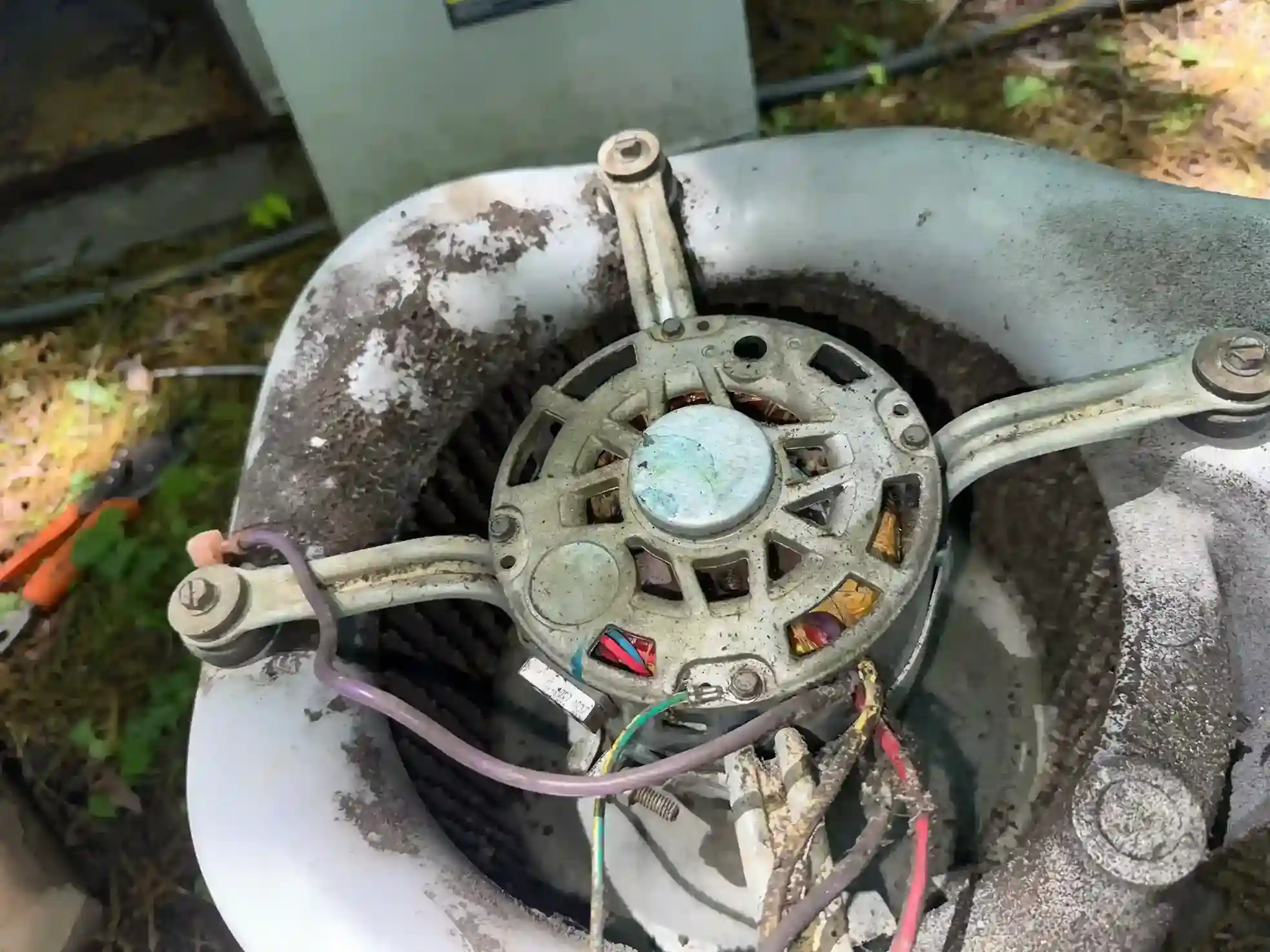
Blower Motor Removal & Inspection
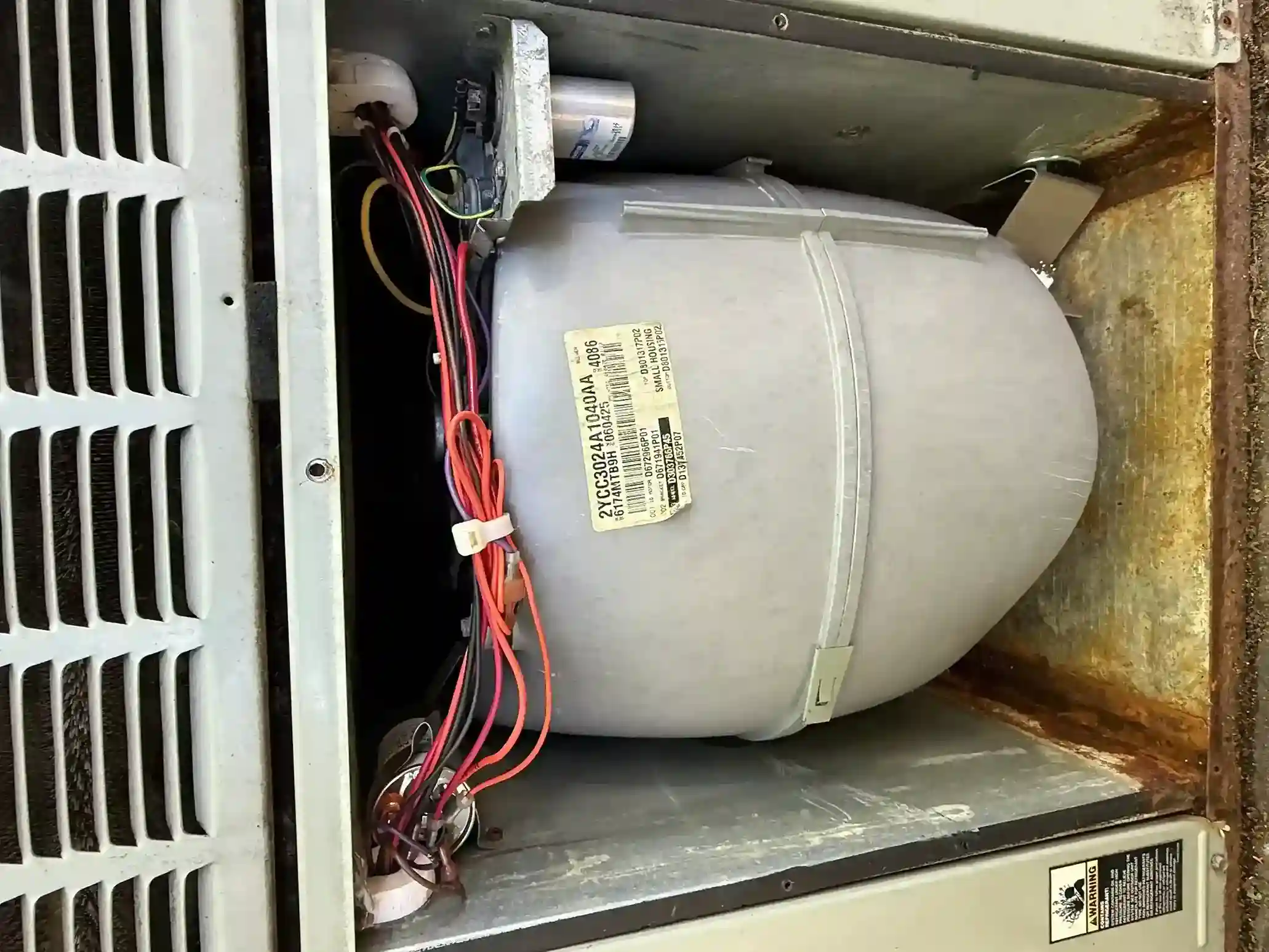
Heavily soiled blower motor assembly extracted from air handler unit. Thick grease and dust buildup on motor housing and lead wires indicates long-term restricted airflow and reduced system efficiency.
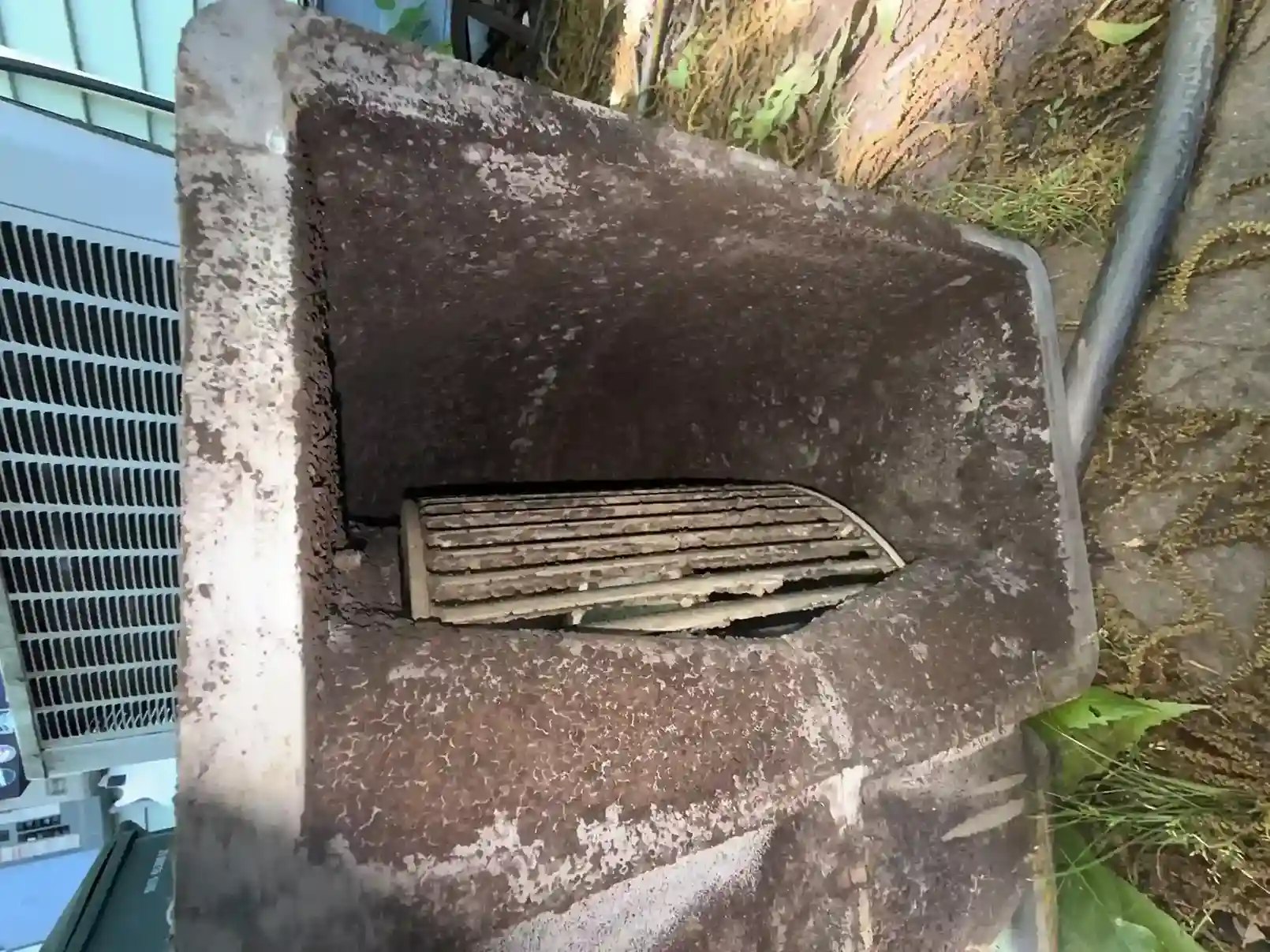
Return Air Grille Inspection
Top-down view of heavily clogged return air grille and filter housing. Dense dust accumulation on grille fins restricts airflow and strains the HVAC system blower motor.
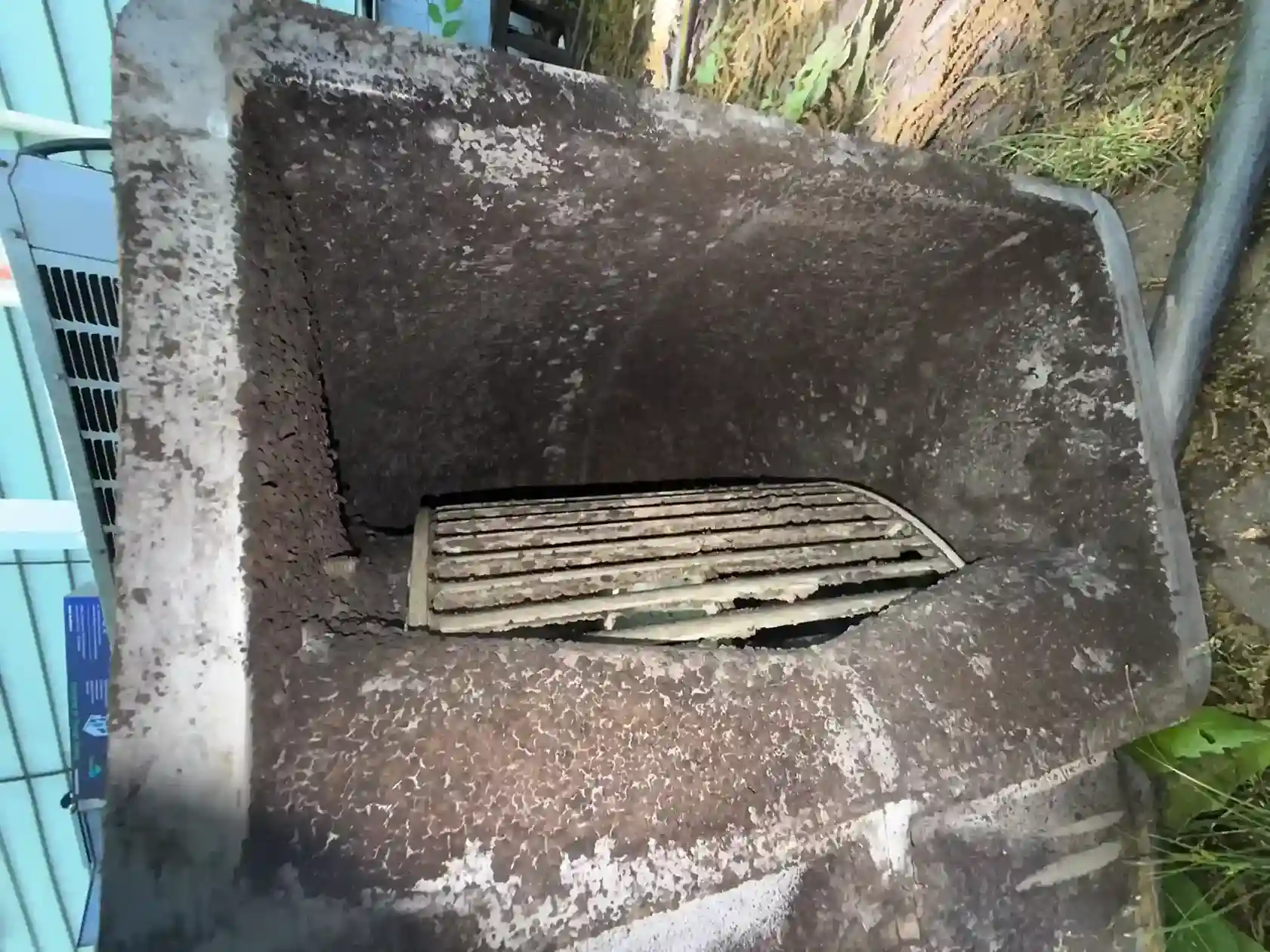
Clogged Filter Grille Assessment
Close-up of dust-caked AC unit filter grille prior to cleaning. Heavy debris loading reduces system airflow, increases energy consumption, and degrades indoor air quality.
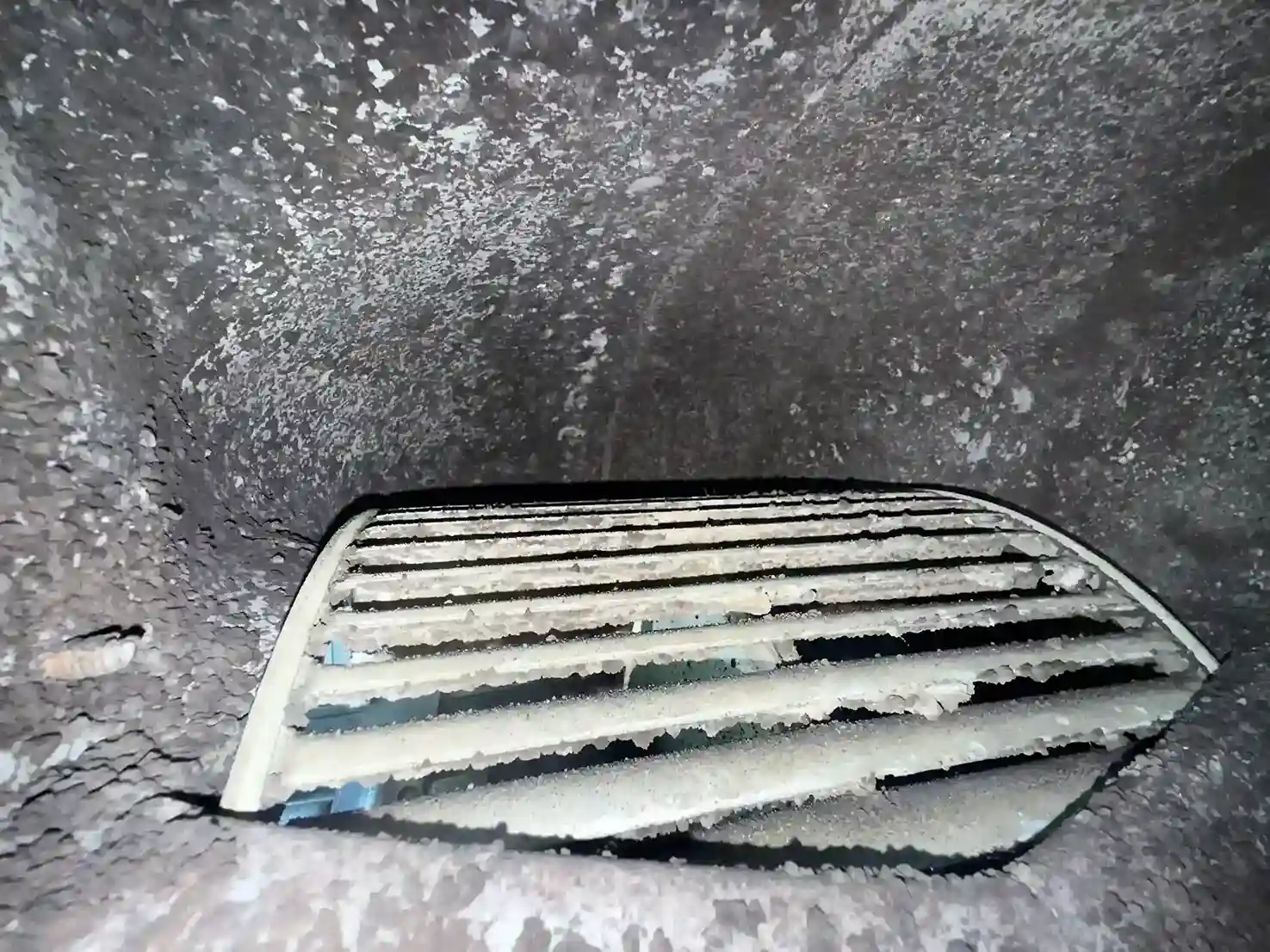
Duct Interior Before Cleaning
View inside duct trunk line showing thick dust and debris coating on interior walls. Accumulated particulates reduce airflow efficiency and circulate contaminants throughout the home.
Ductwork Contamination Detail
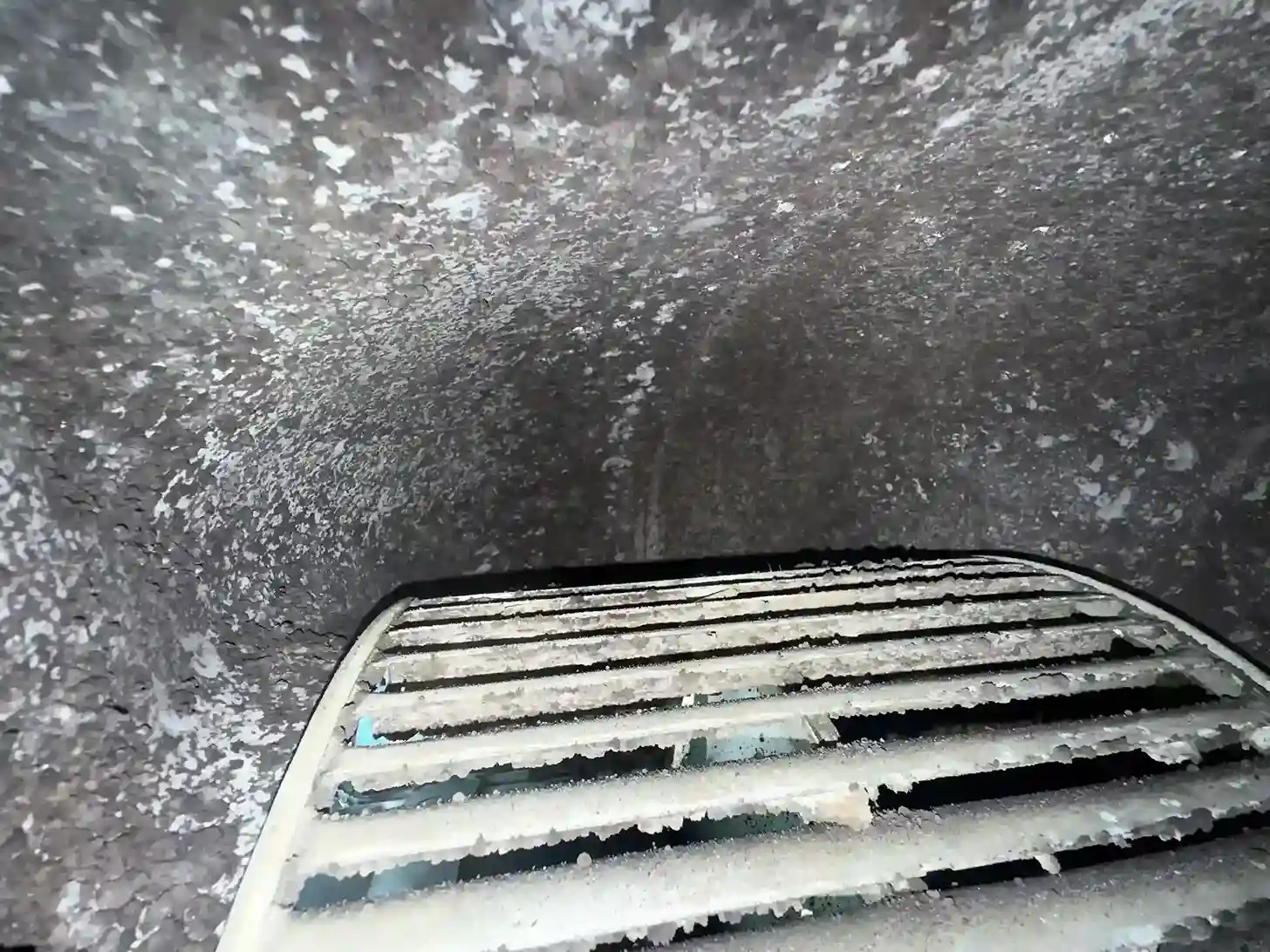
Additional angle inside duct run revealing heavy dust layering on all interior surfaces. Visible vent register ahead shows debris buildup extending to the discharge point.
Air Handler Interior Inspection
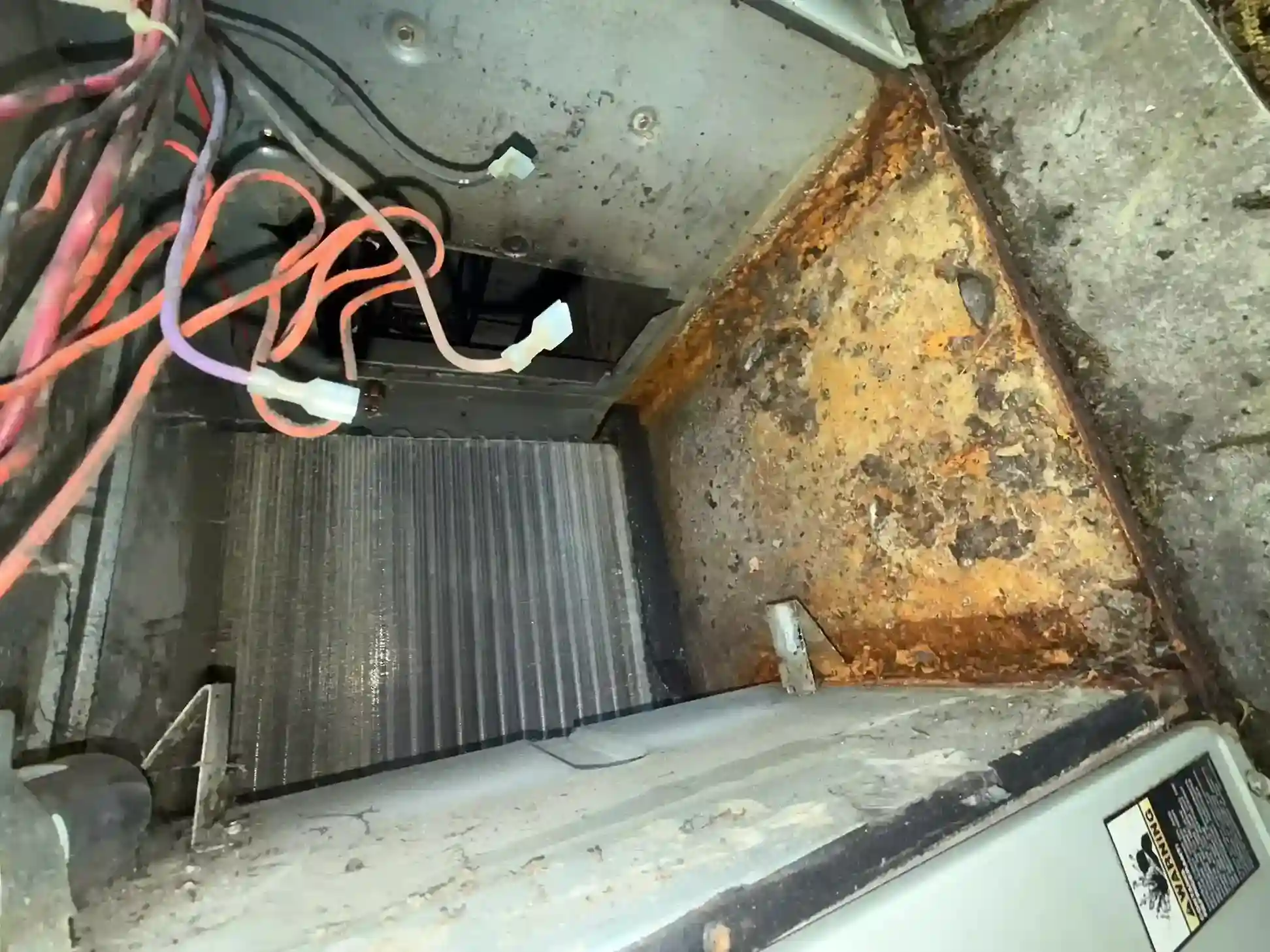
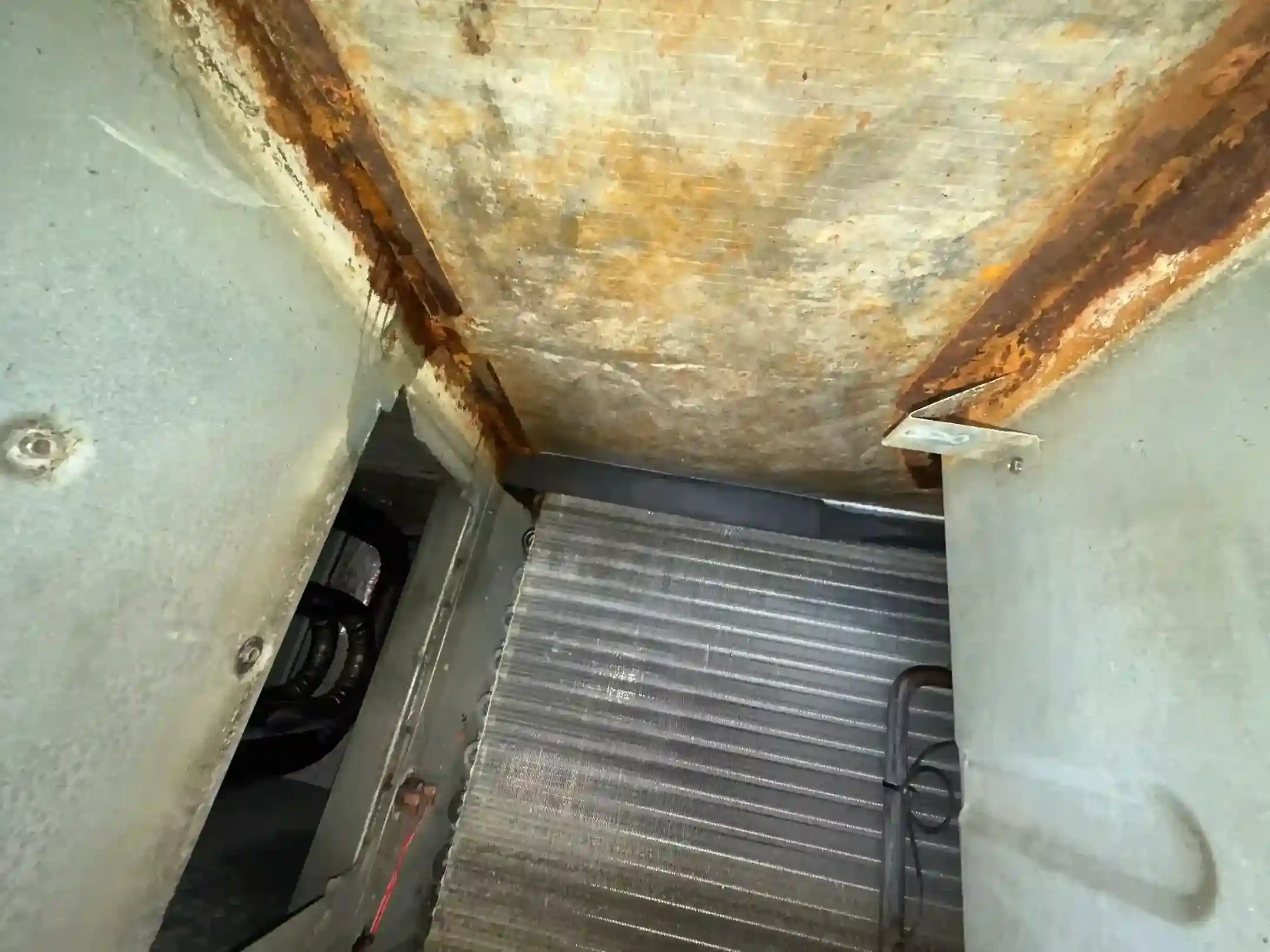
Open air handler cabinet revealing dirty evaporator A-coil and severely rusted interior housing wall. Loose multicolor control wiring (red, orange, purple) indicates prior unorganized service work requiring correction.
HVAC Wiring & Capacitor Inspection
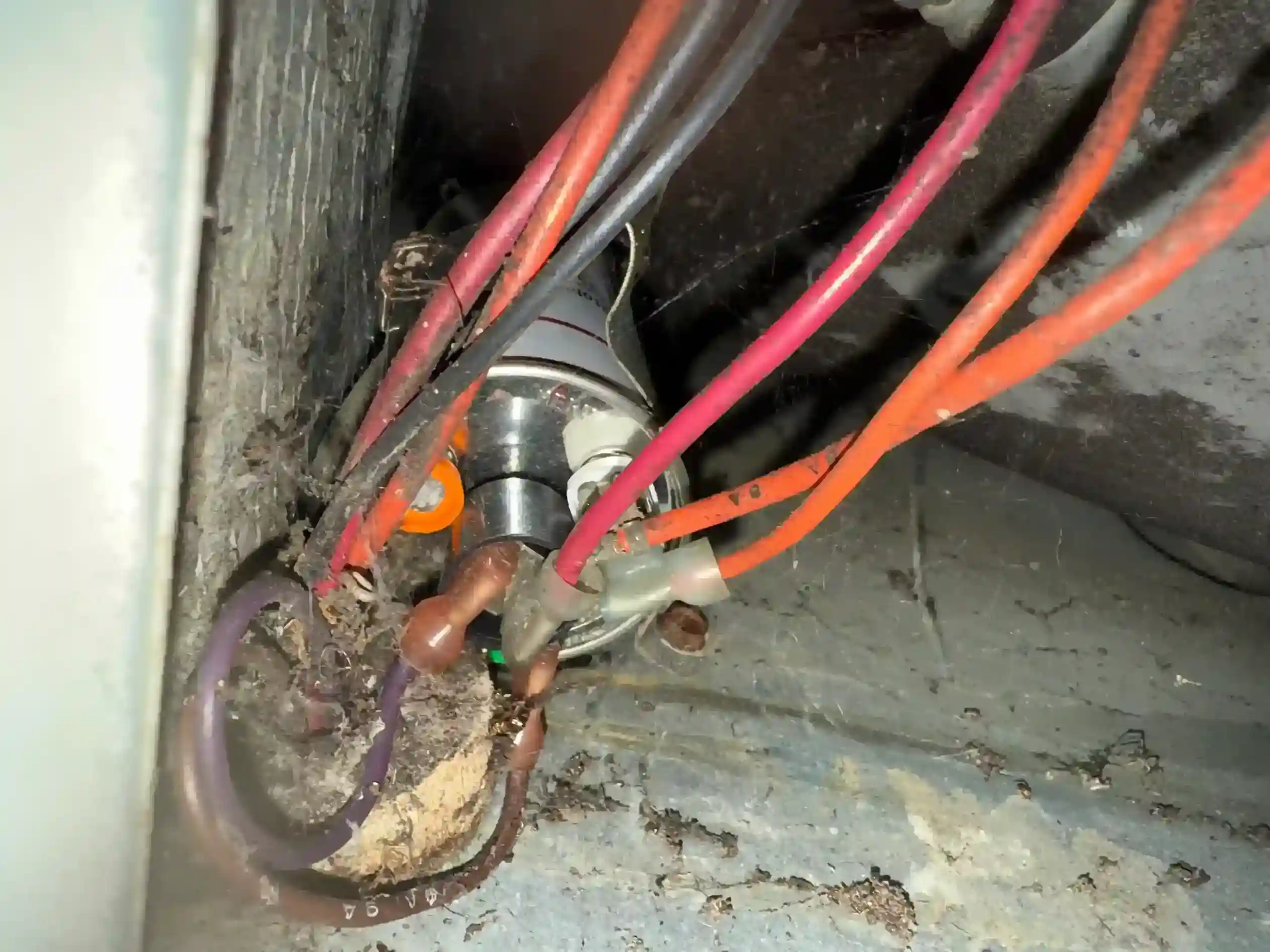
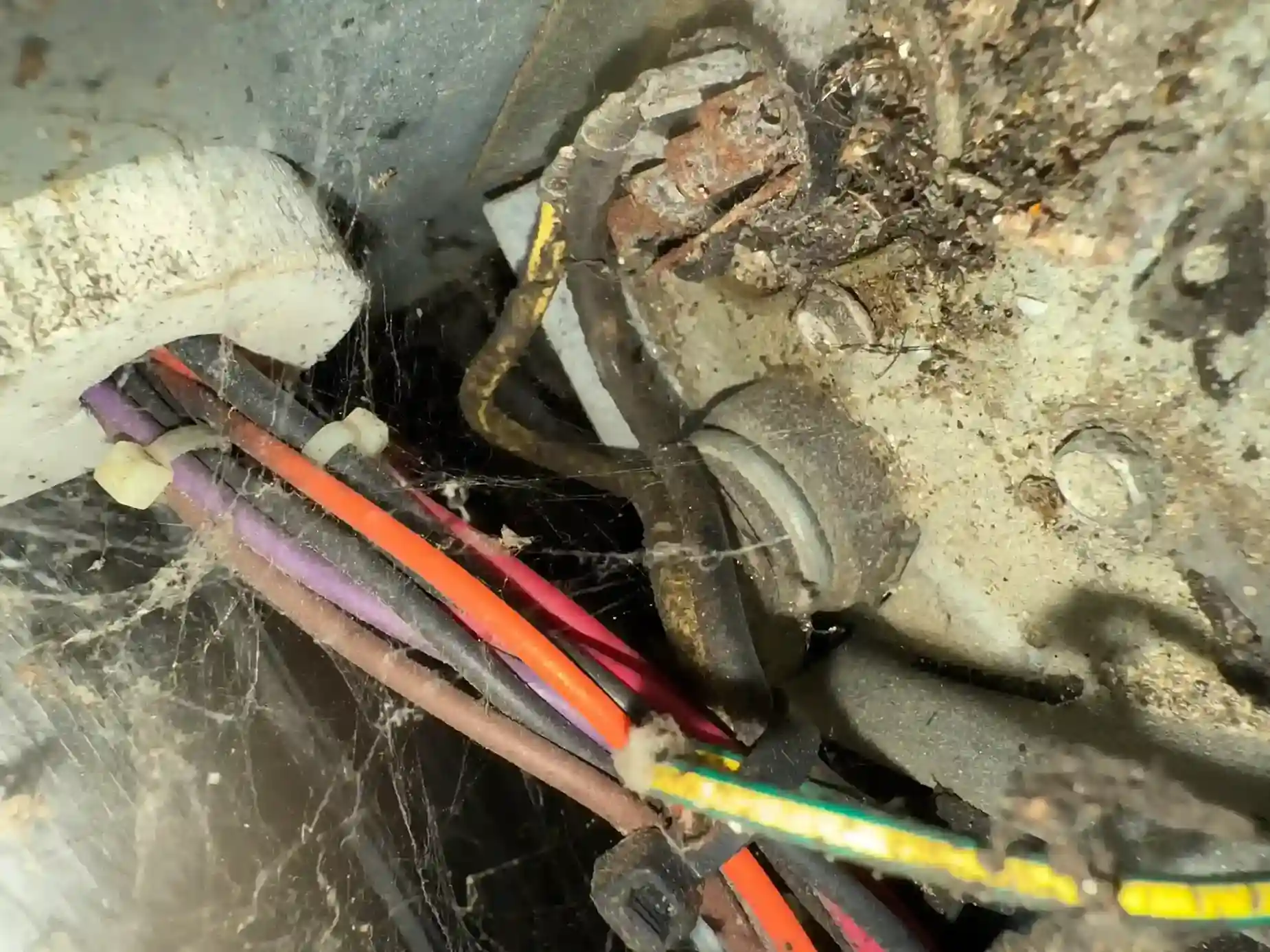
Close-up of tangled control wiring and run capacitor inside dirty air handler housing. Disorganized wiring creates risk of shorts and complicates future diagnostics and service.
Control Wiring Condition Assessment
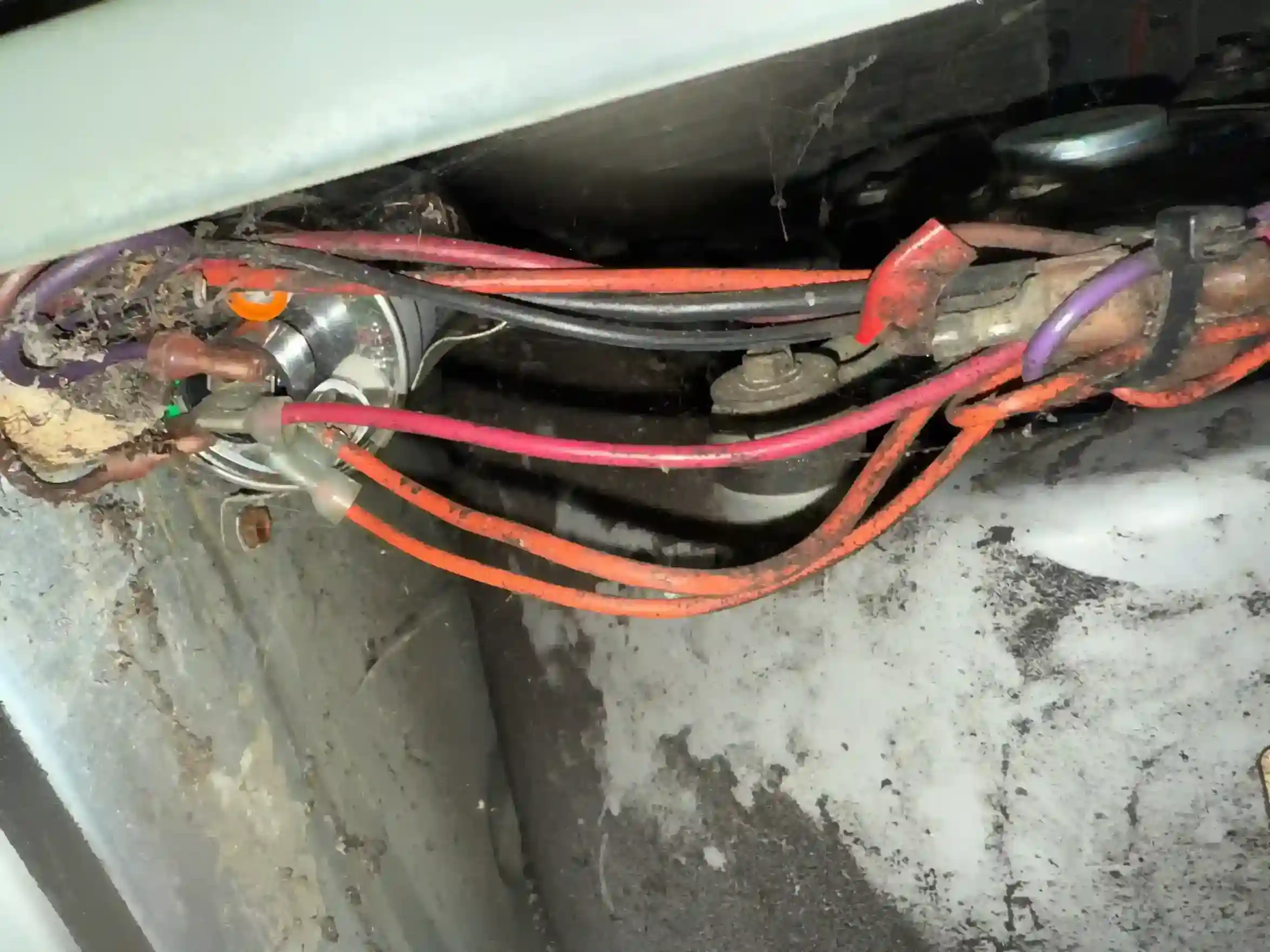
Interior view of air handler showing multiple loose and disorganized control wires alongside blower motor components. Wiring inspection confirms need for cleanup and secure routing.
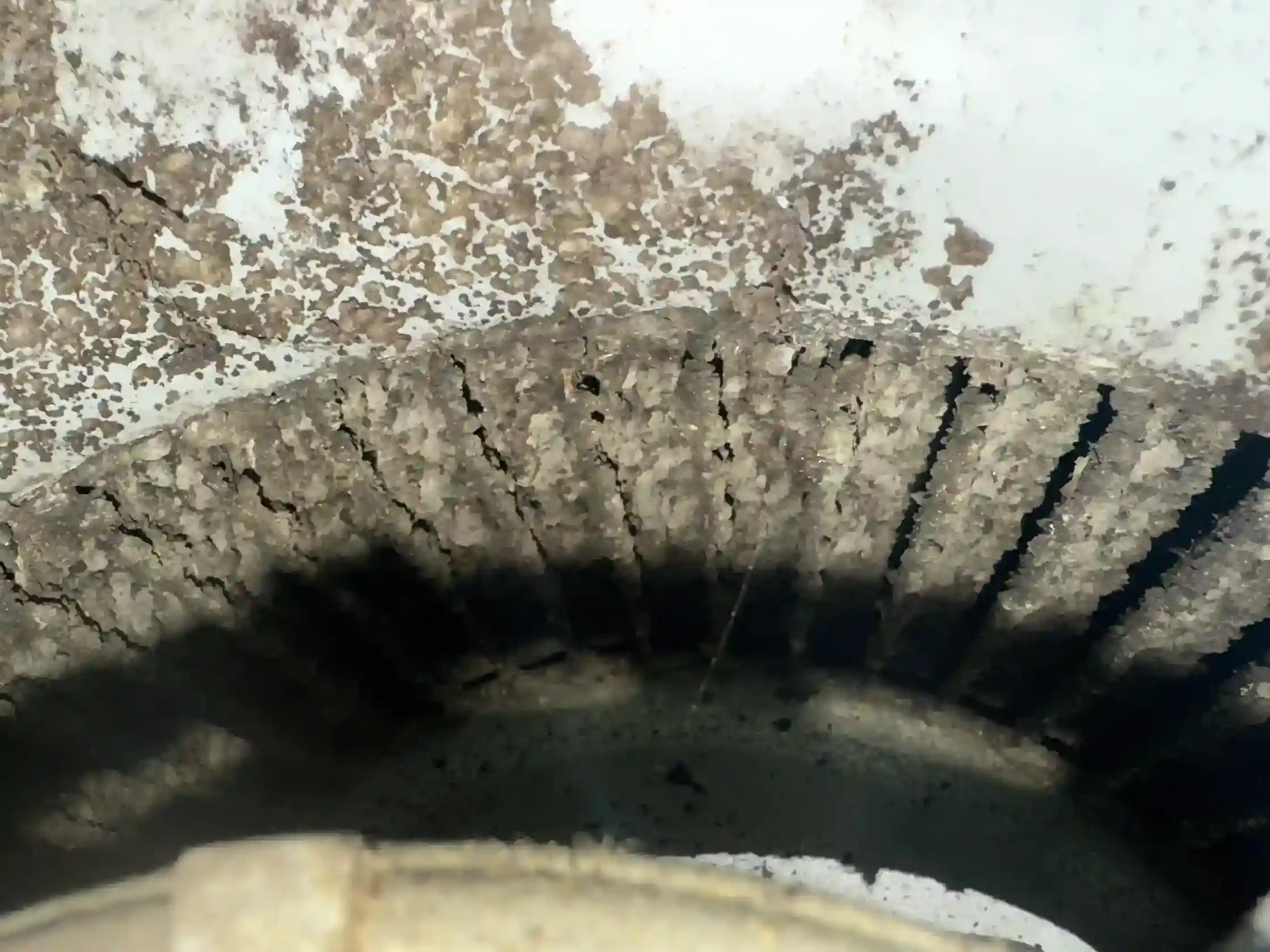
Squirrel Cage Blower Wheel — Before Cleaning
Severe dust and debris caked on every fin of the squirrel cage blower wheel. This level of buildup significantly reduces airflow volume, strains the motor, and lowers overall system efficiency.
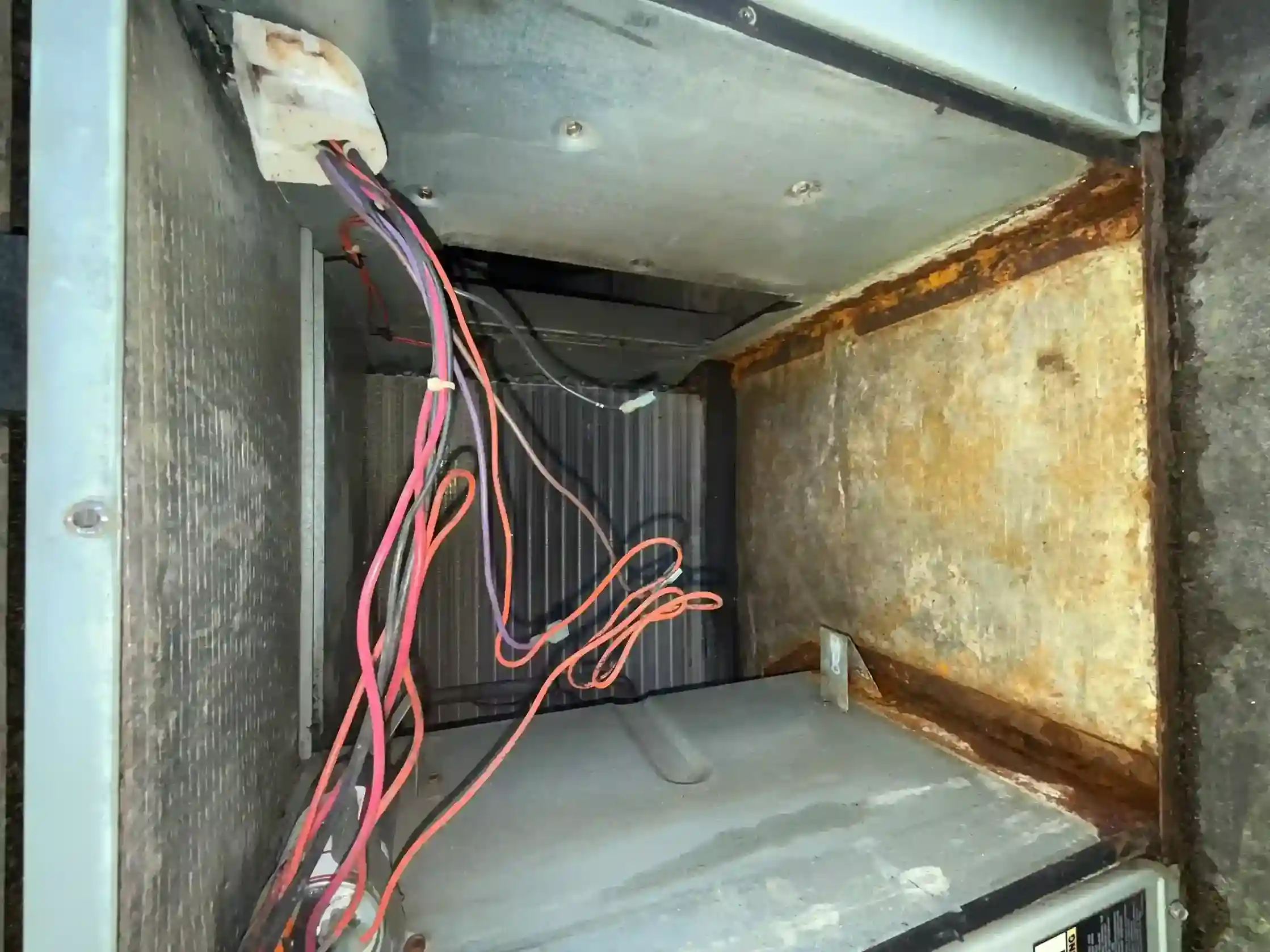
Evaporator Coil & Housing Condition
Full interior view of air handler showing evaporator A-coil with loose wiring hanging beneath. Extreme rust on the right housing wall indicates long-term moisture exposure requiring remediation.
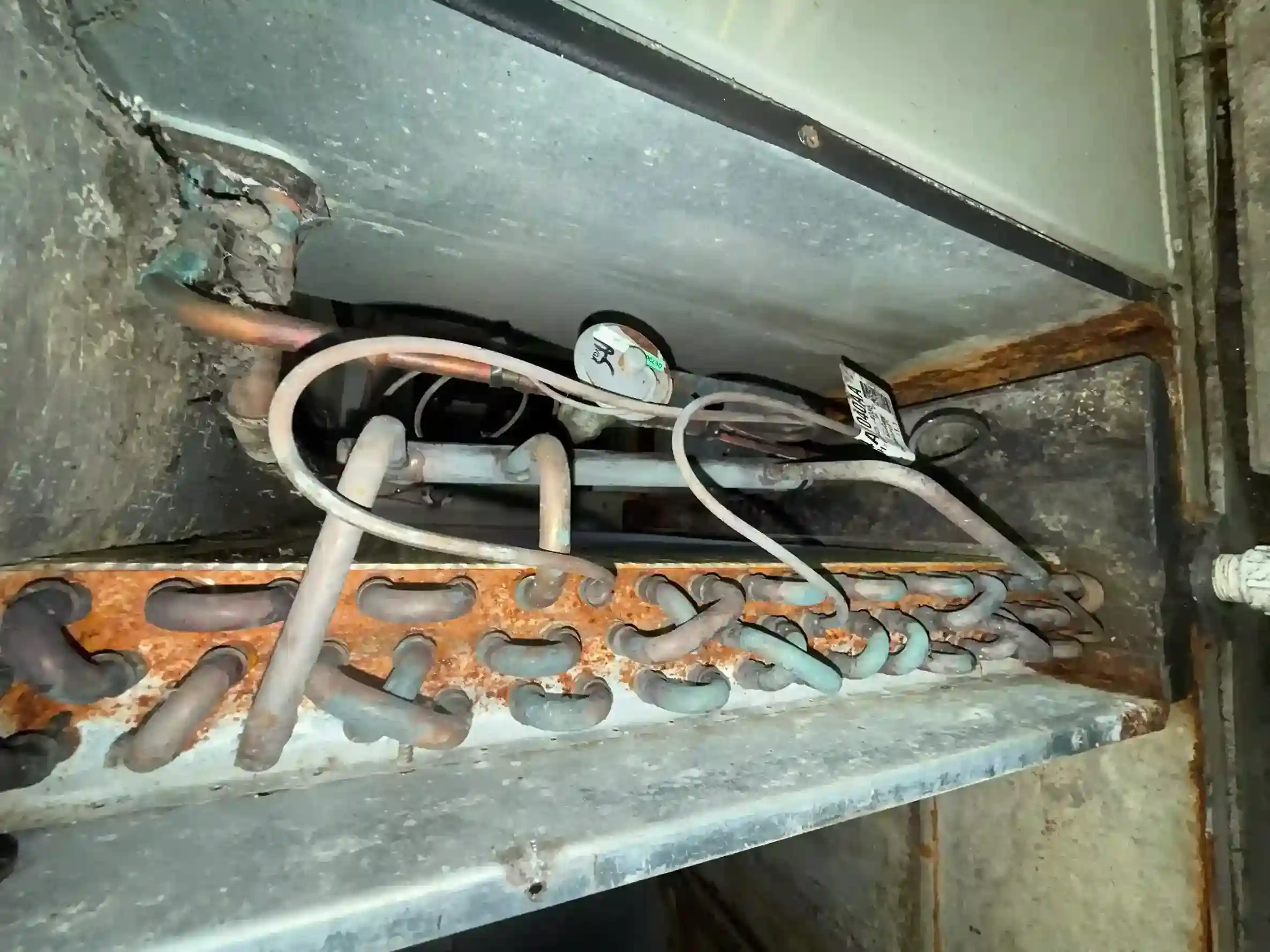
Evaporator Coil Corrosion & TXV Inspection
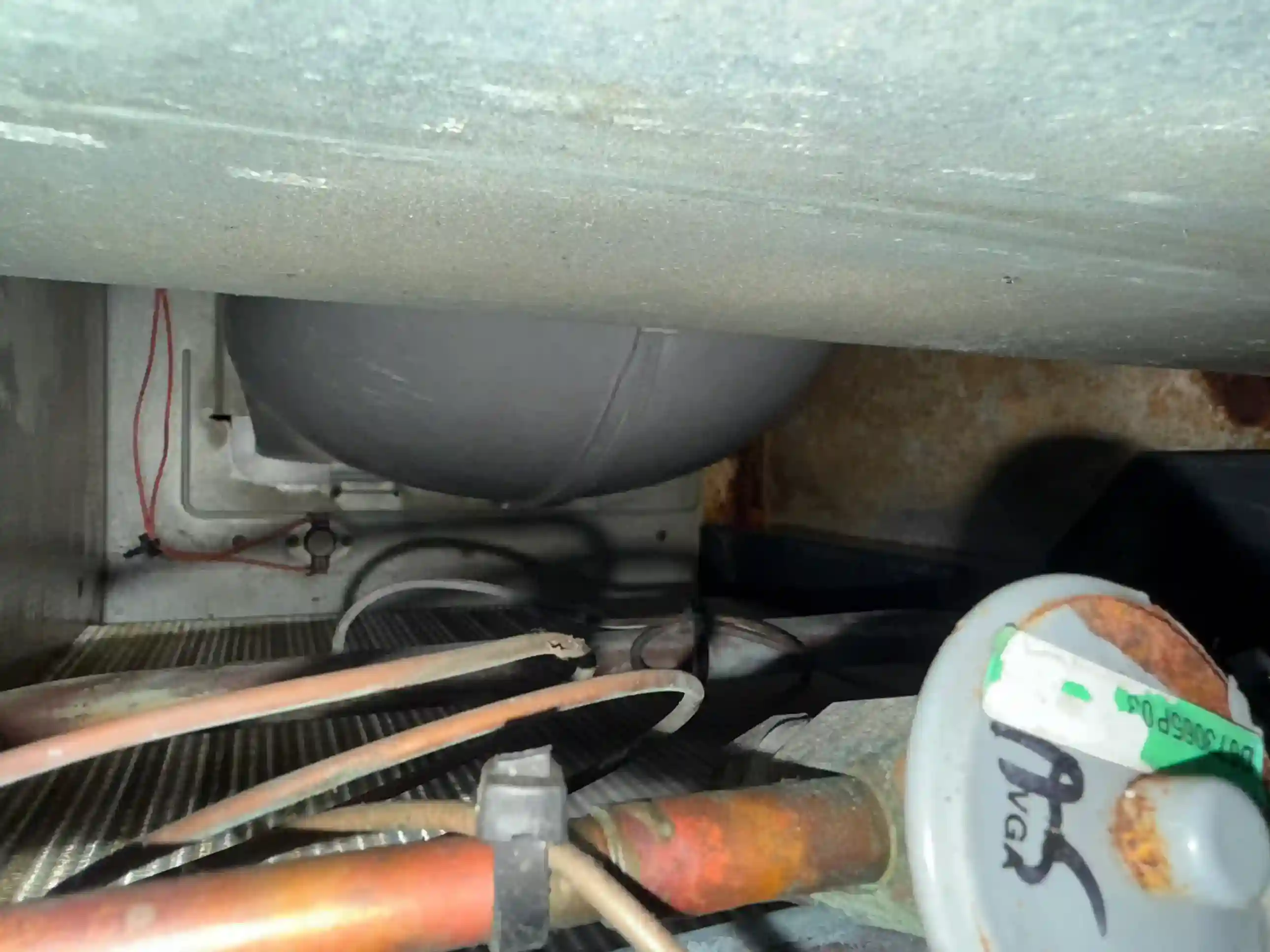
Close-up of lower evaporator coil pan and refrigerant circuit showing severe rust on coil housing, copper U-bend return bends, and the thermostatic expansion valve (TXV). Black insulation on refrigerant lines also documented.
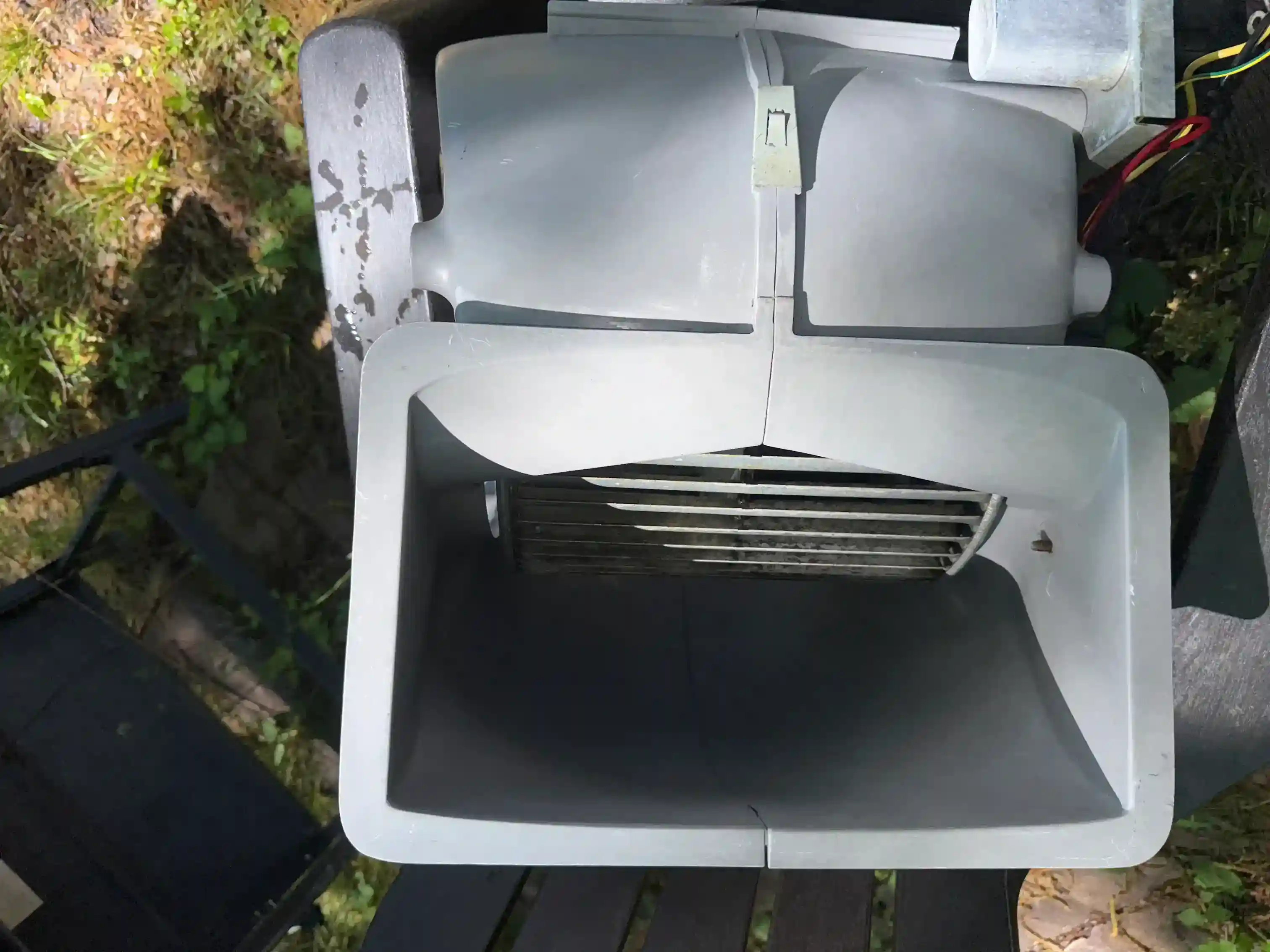
Blower Housing After Cleaning
Restored blower compartment after deep cleaning. Interior housing surfaces scrubbed clean and blower wheel fins cleared of all debris, restoring full rated airflow capacity.
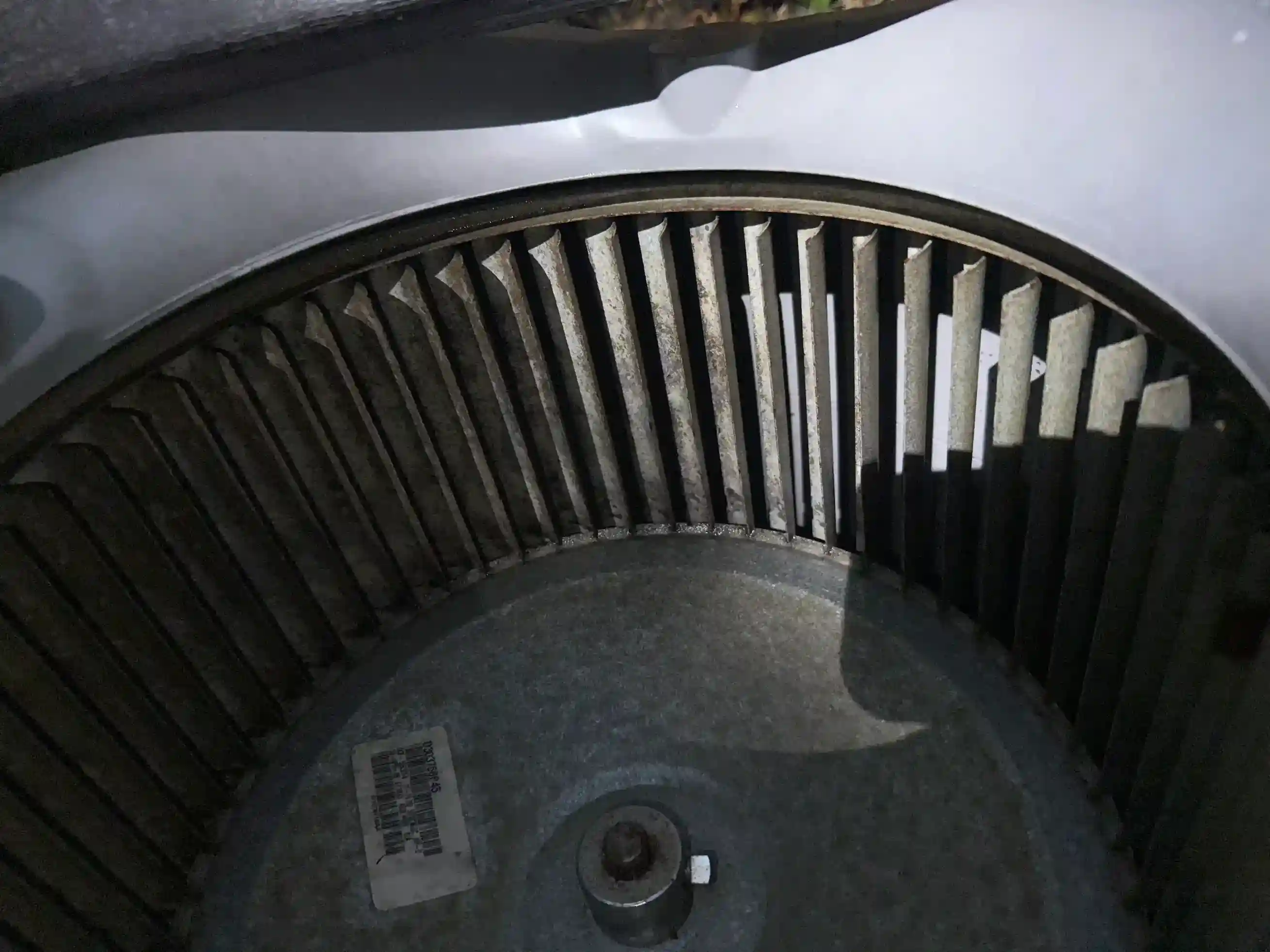
Clean Squirrel Cage Blower Wheel
Squirrel cage blower wheel after thorough cleaning — all fan blades restored to clean condition. Removal of debris buildup restores rated airflow and reduces motor amperage draw.
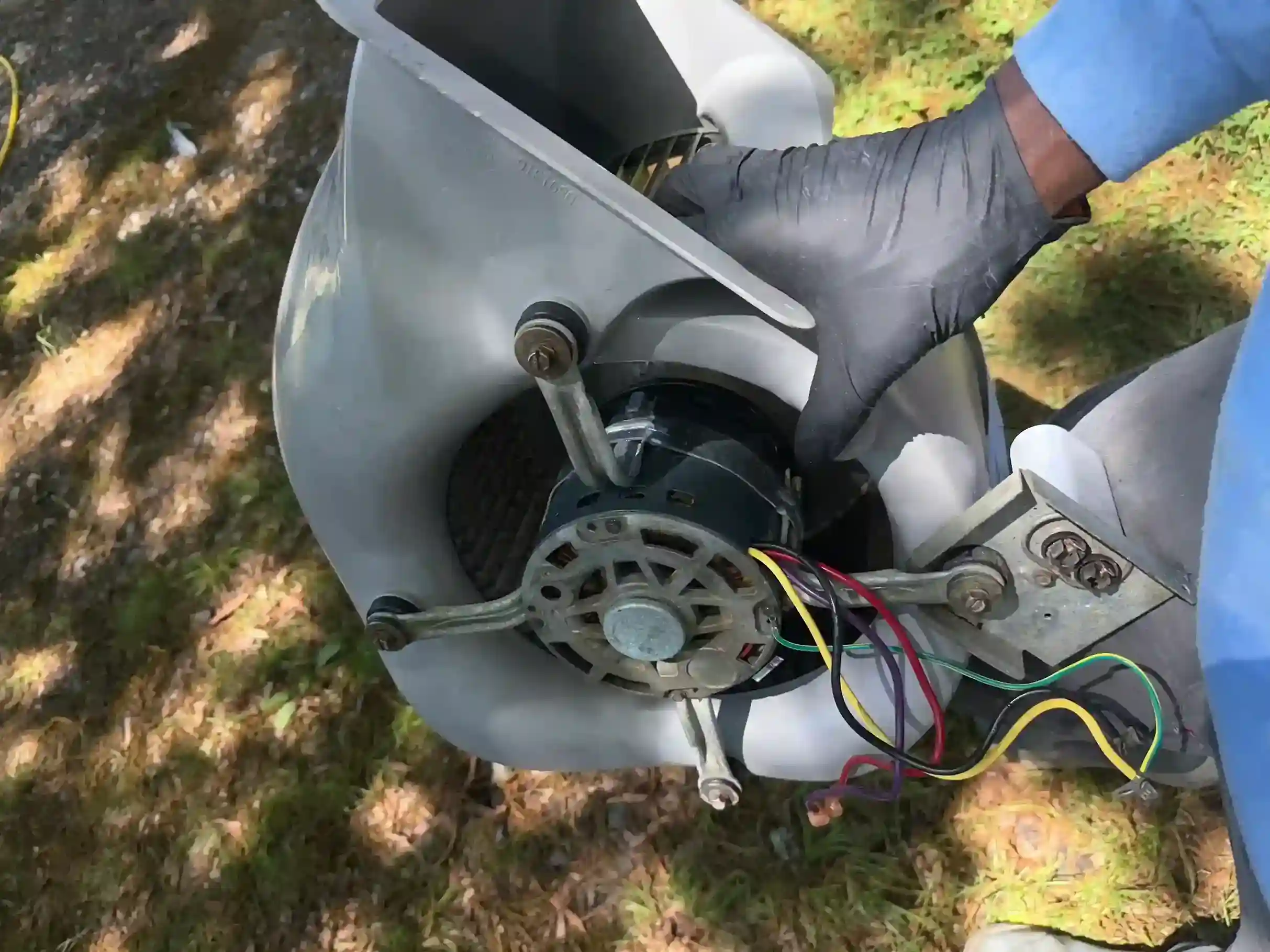
Blower Motor Lead Wire Inspection
Technician Toy inspecting extracted blower motor assembly and color-coded lead wires (red, yellow, purple, green) at the terminal block. Off-unit inspection ensures correct wire identification before reinstallation.
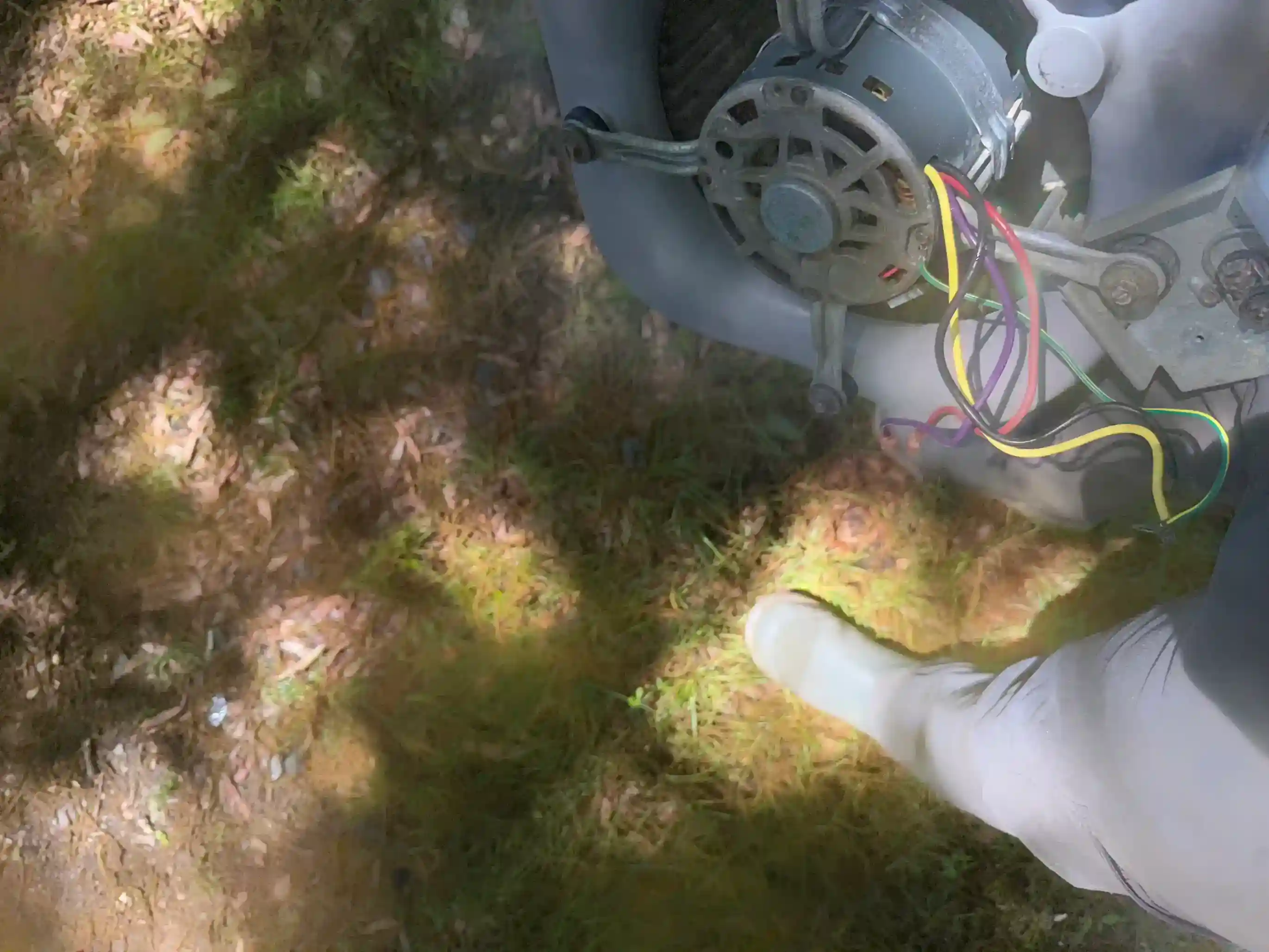
Motor Assembly Wiring Verification
Technician examining blower motor lead connections at junction block. Verifying correct wire pairing (yellow, red, purple, green) is critical for proper motor speed selection and safe reinstallation.
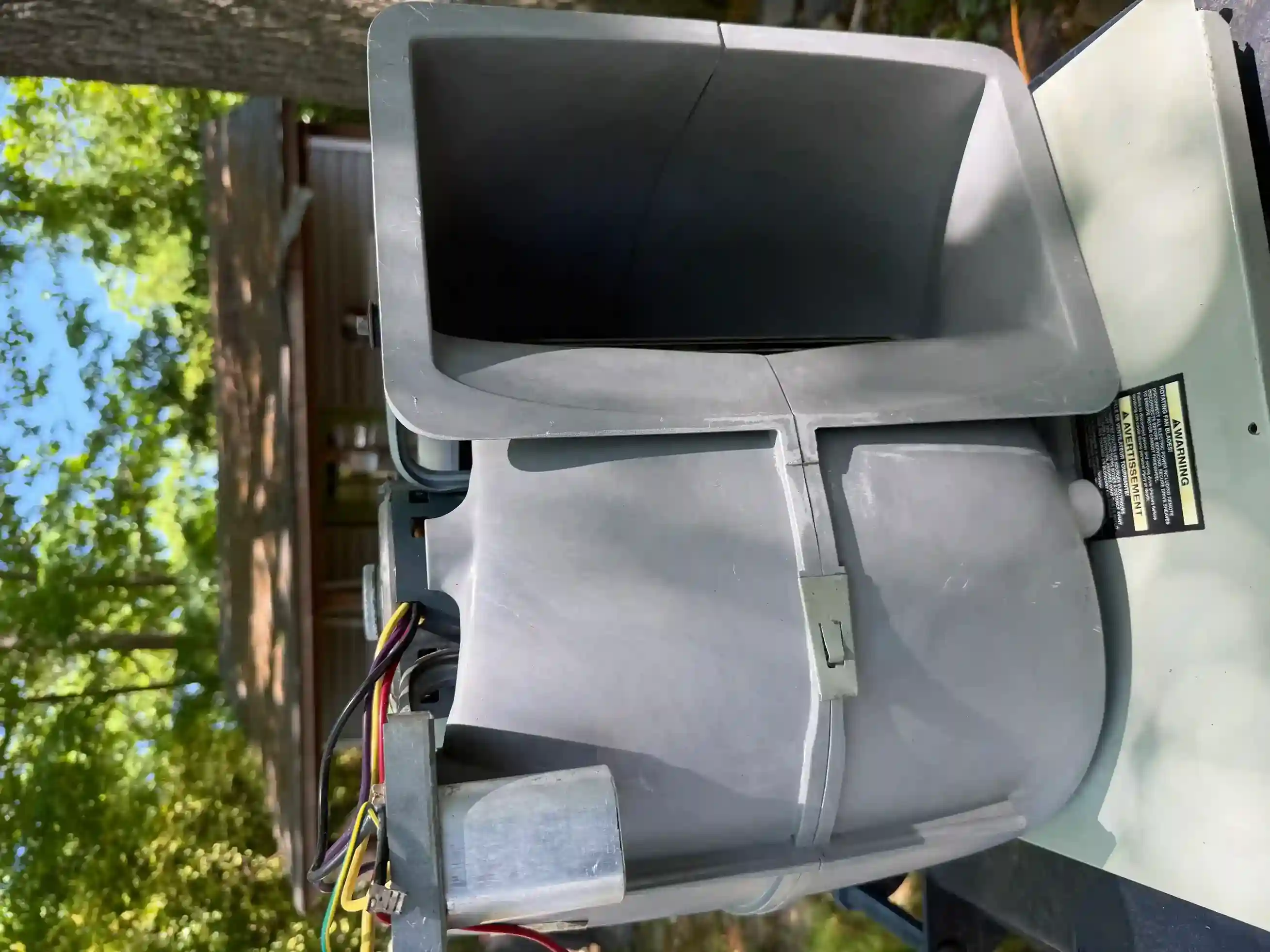
Reassembled Blower Housing Ready for Install
Cleaned and reassembled blower housing photographed prior to reinstallation. Control wiring (yellow, red, purple) neatly routed and blower compartment fully restored.
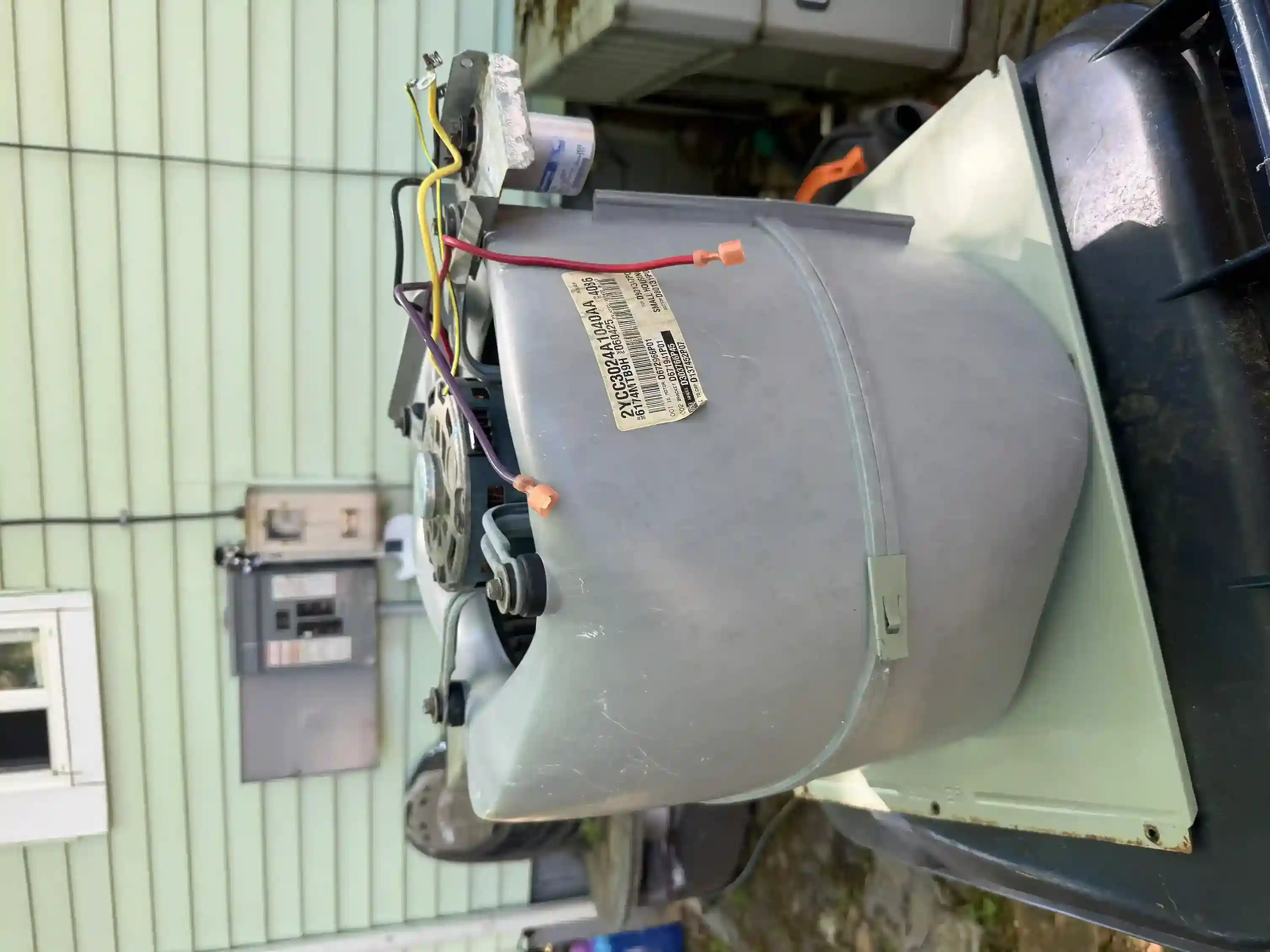
Unit Staged for Reinstallation
Serviced blower assembly staged at exterior wall ready for reinstall. Electrical panel visible in background confirms unit is being returned to its original service location.
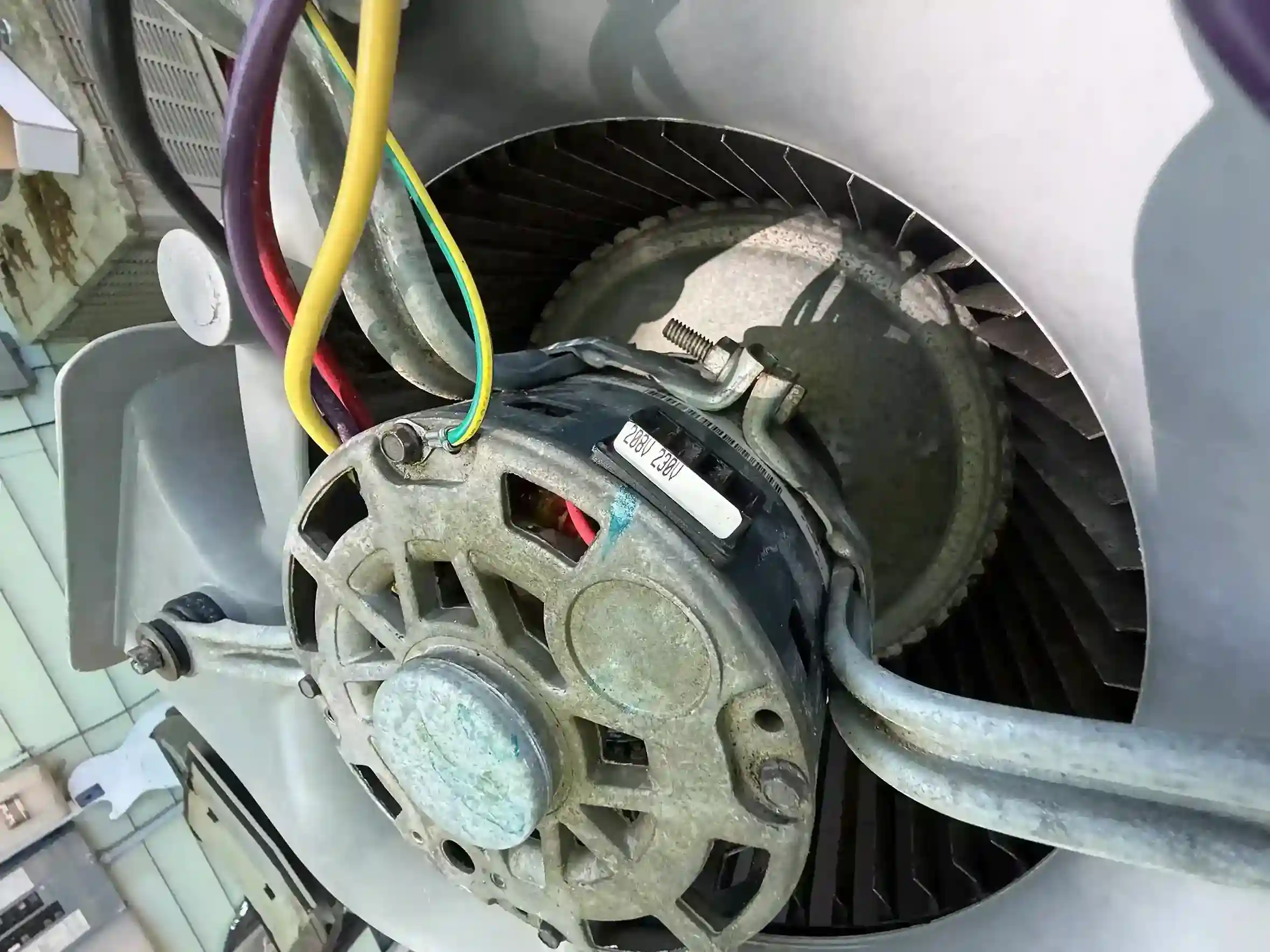
Blower Motor Nameplate & Wiring Review
Close-up of blower motor nameplate showing 208V/230V dual-voltage rating. Color-coded leads (yellow, red, green, purple) identified against motor data label to confirm correct voltage tap selection.
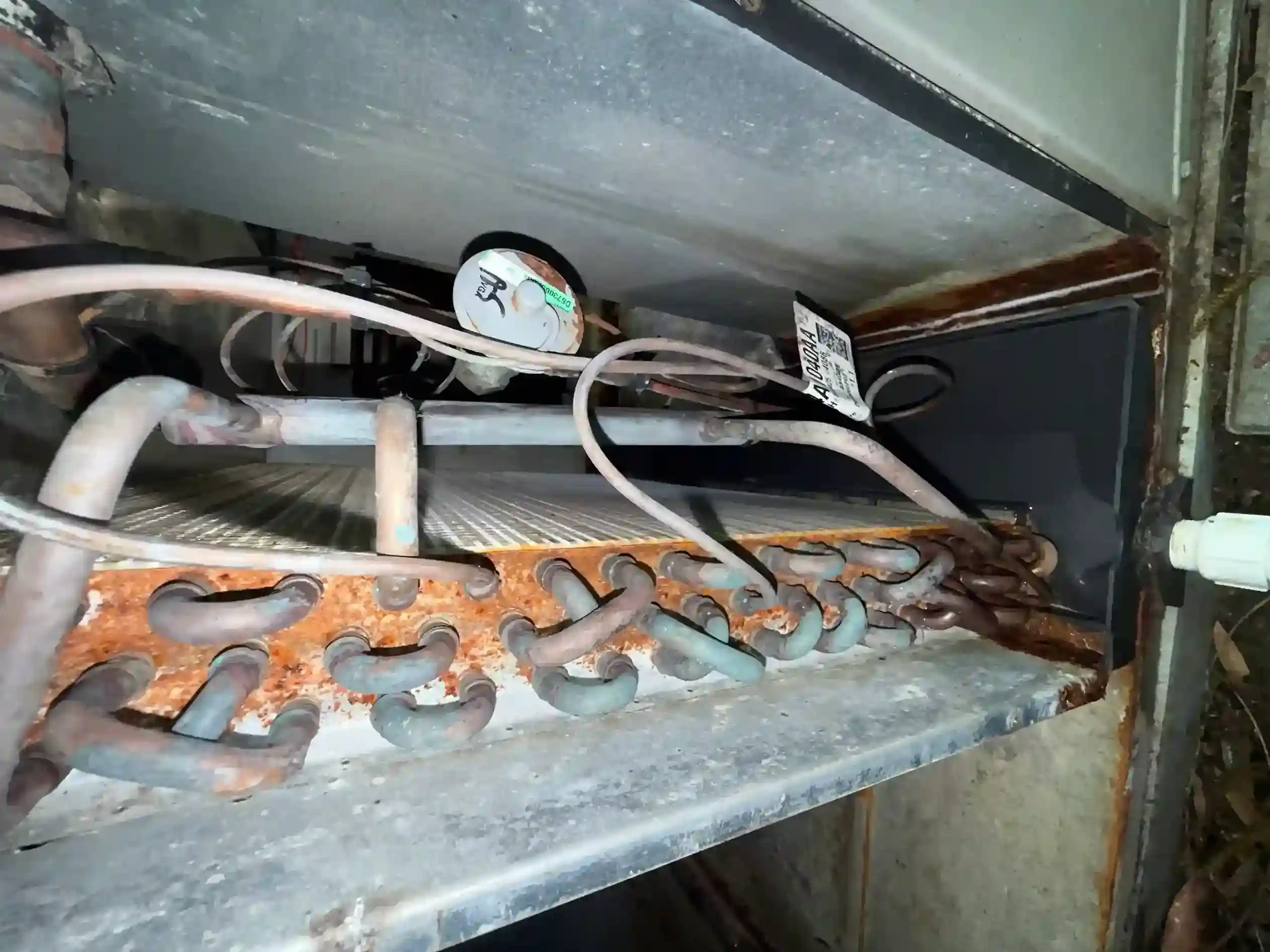
Corroded Evaporator Coil Return Bends
Severe corrosion documented on evaporator coil return bends and drain pan. Heavy rust on copper U-tubes and coil housing indicates elevated risk of refrigerant leak and compromised heat transfer efficiency.
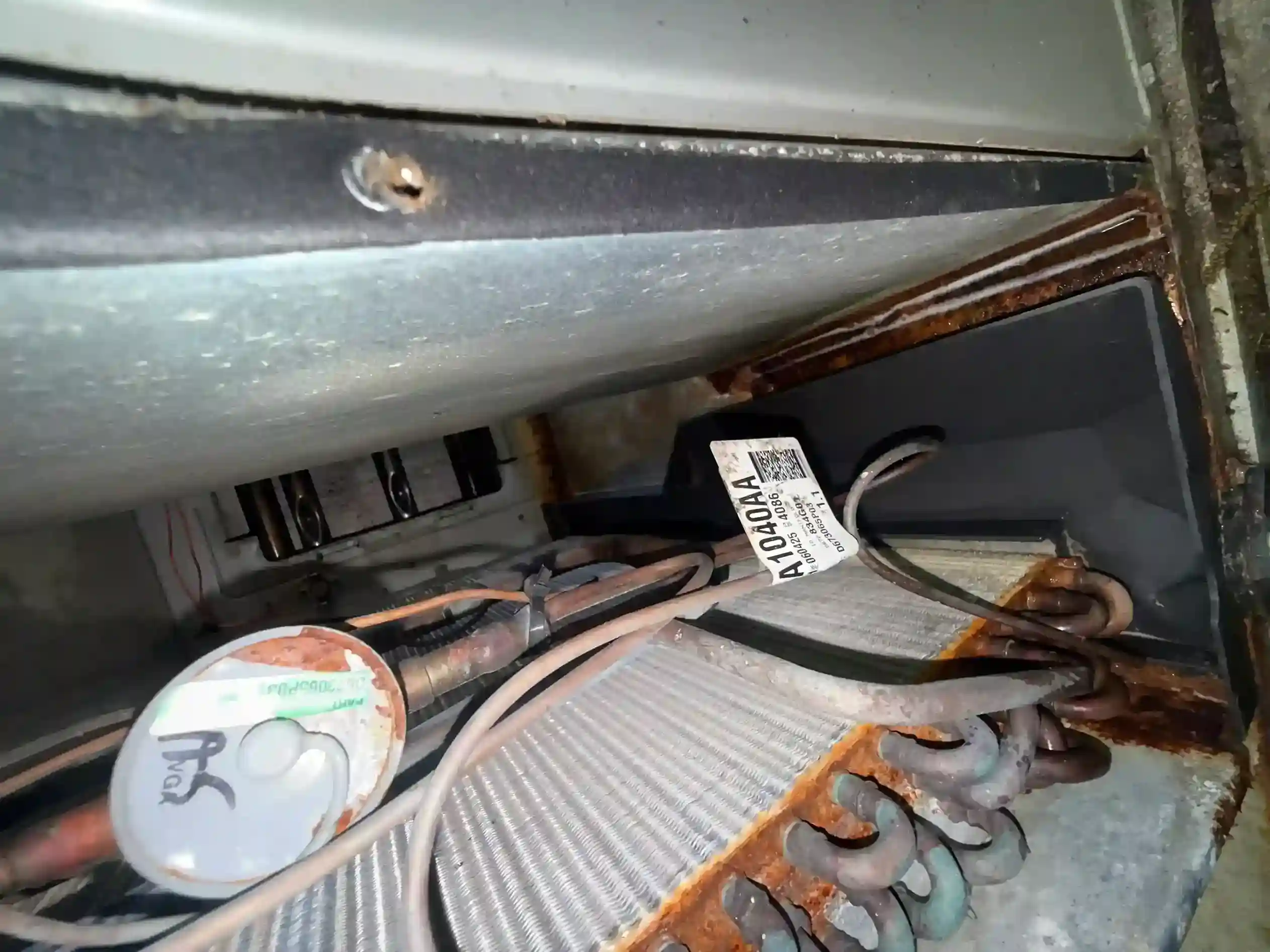
Evaporator Coil Replacement Assessment
Evaporator coil (part #A1040AA) showing extreme rust and corrosion throughout return bend area and drain pan. TXV and copper refrigerant lines inspected; coil condition documented for replacement recommendation.
Return Air Vent Cover Before Cleaning
Return air vent cover photographed from below showing dense dust caked across all grille fins. Heavily clogged return vents starve the blower of airflow and reduce overall system capacity.
Clean Return Air Vent Installed
Freshly cleaned return air vent cover reinstalled flush against ceiling. All fins cleared of dust and debris, restoring unobstructed return airflow to the air handler.
Supply Register Before Cleaning
Supply air register removed and photographed showing heavy dust and debris accumulation on louvers. Clogged supply registers reduce conditioned airflow into living spaces and degrade indoor air quality.
Clean Supply Register Reinstalled
Cleaned supply air register reinstalled in ceiling. Open, unobstructed louvers allow full delivery of conditioned air to the room below.
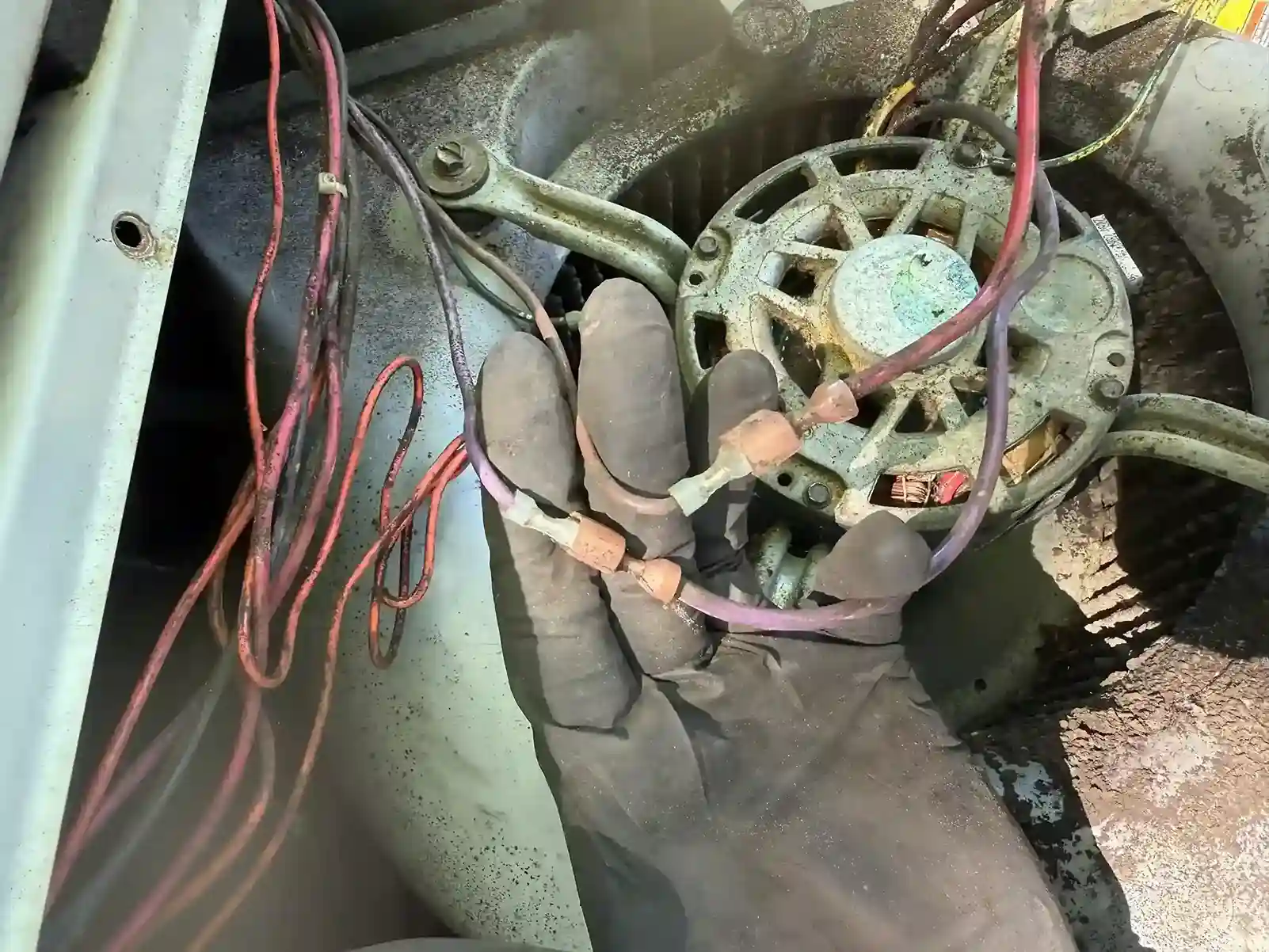
Technician Final Component Inspection
Technician Toy performing hands-on inspection of vent cover or HVAC component as part of final quality check before closing up the unit.
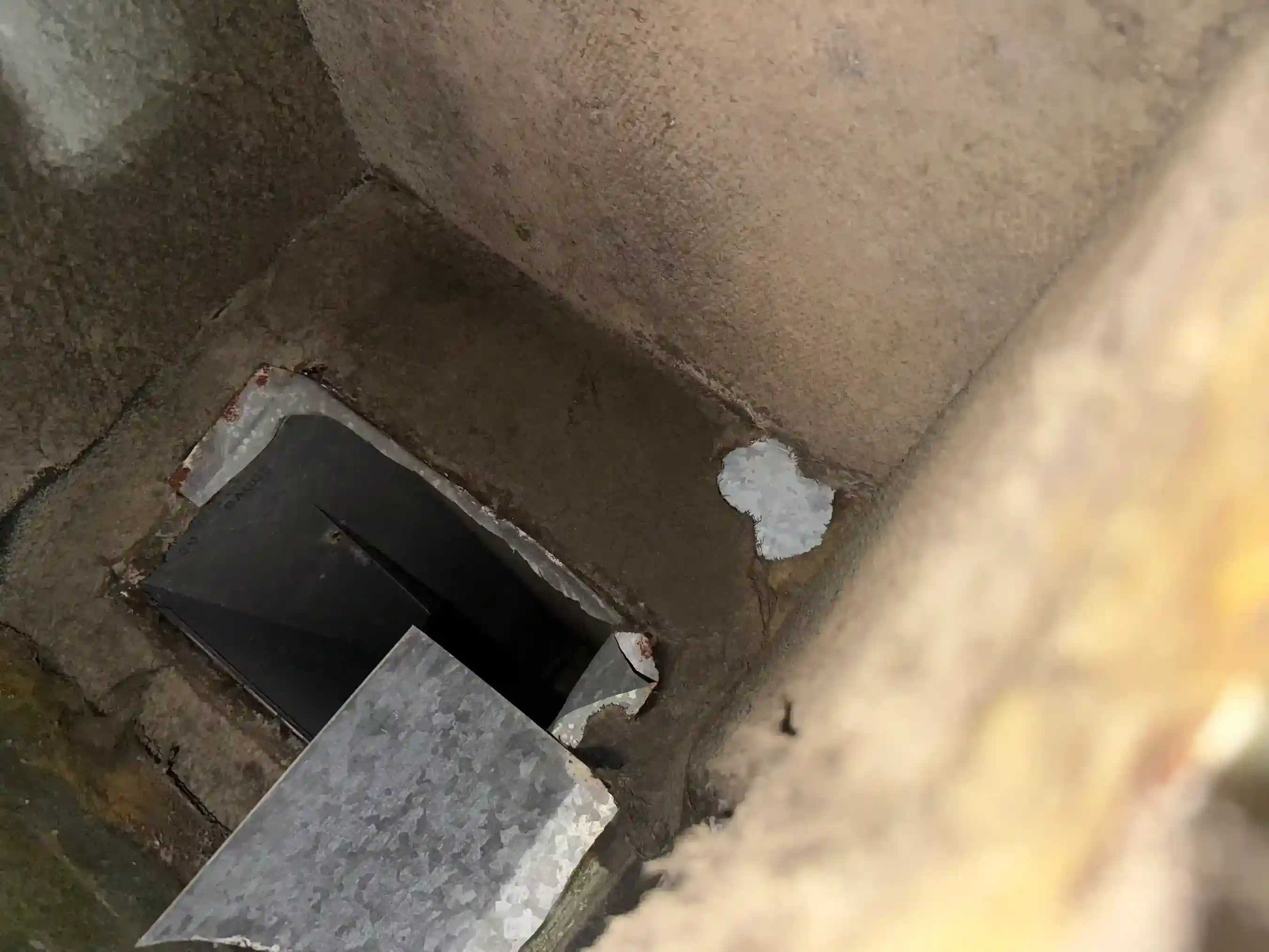
Duct Interior Before Service
View inside duct system at the Sandridge property showing significant dust buildup on interior surfaces. Pre-cleaning documentation establishes baseline contamination level for the job.
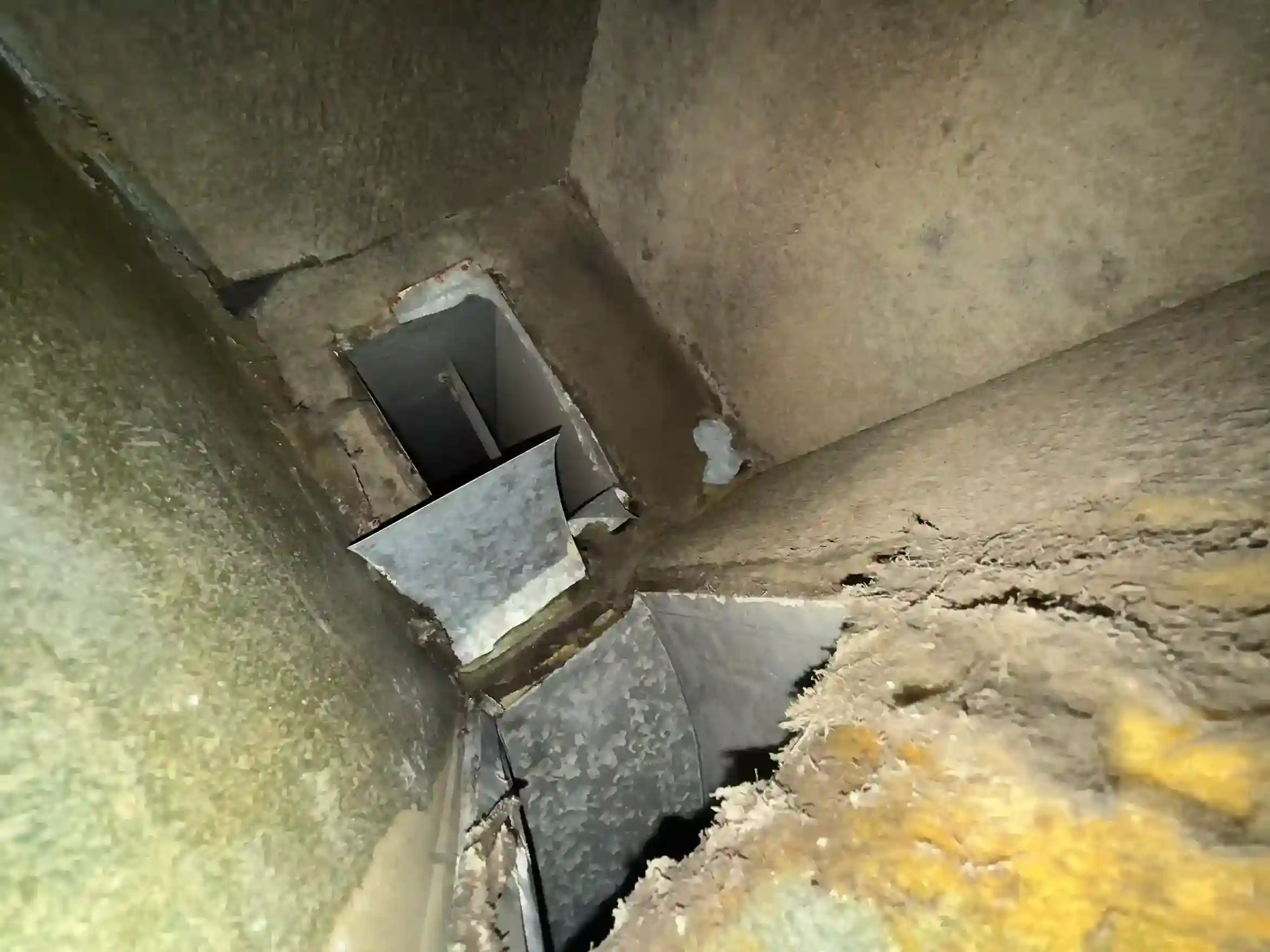
HVAC Component Cleaning Detail
Close-up of soiled HVAC component interior at Sandridge job site. Dust and debris accumulation documented prior to deep cleaning service.
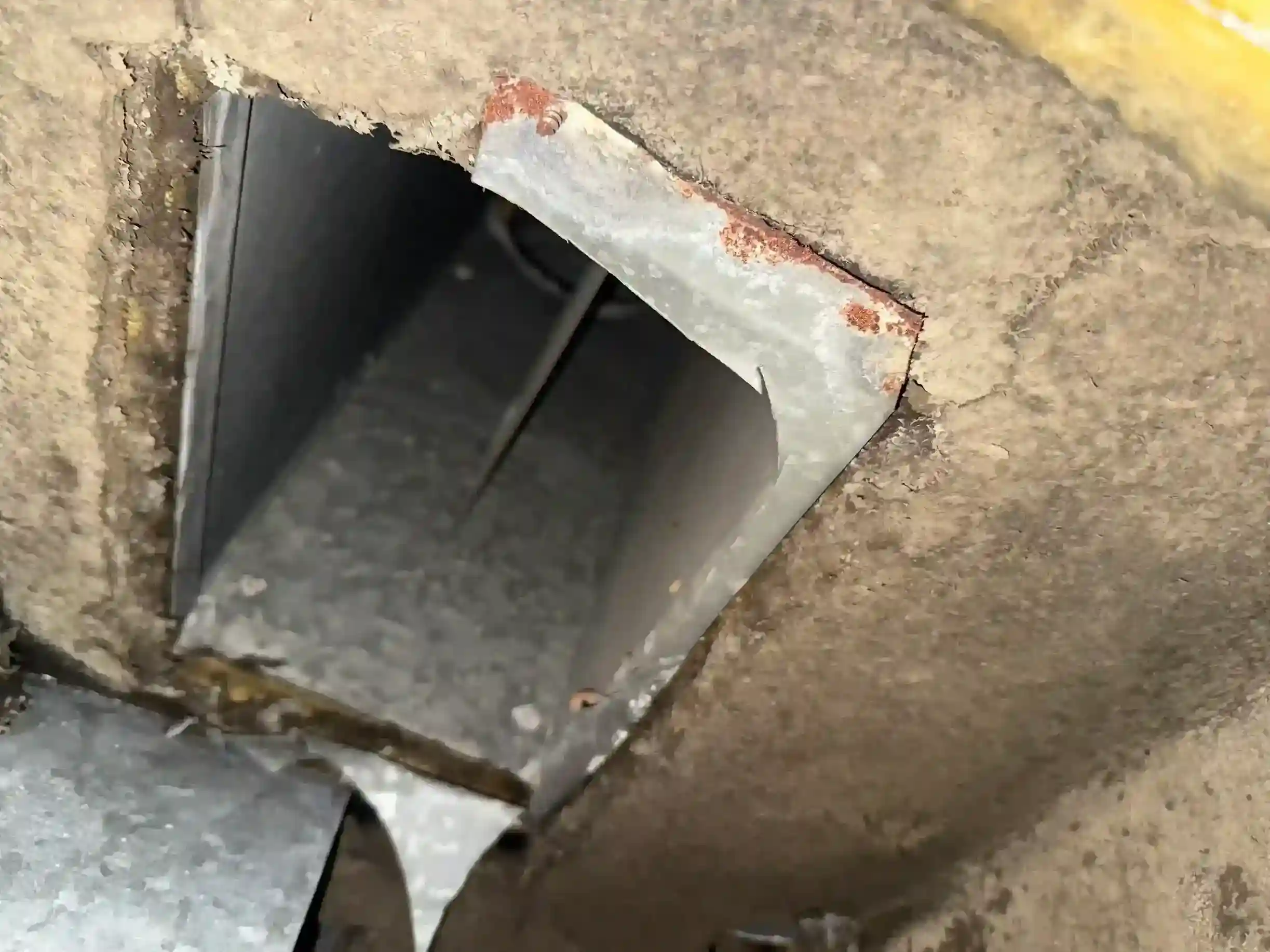
Blower Compartment Condition
Interior of blower compartment or air handler at Sandridge property showing dust accumulation on components. Full cleaning performed to restore airflow and system performance.
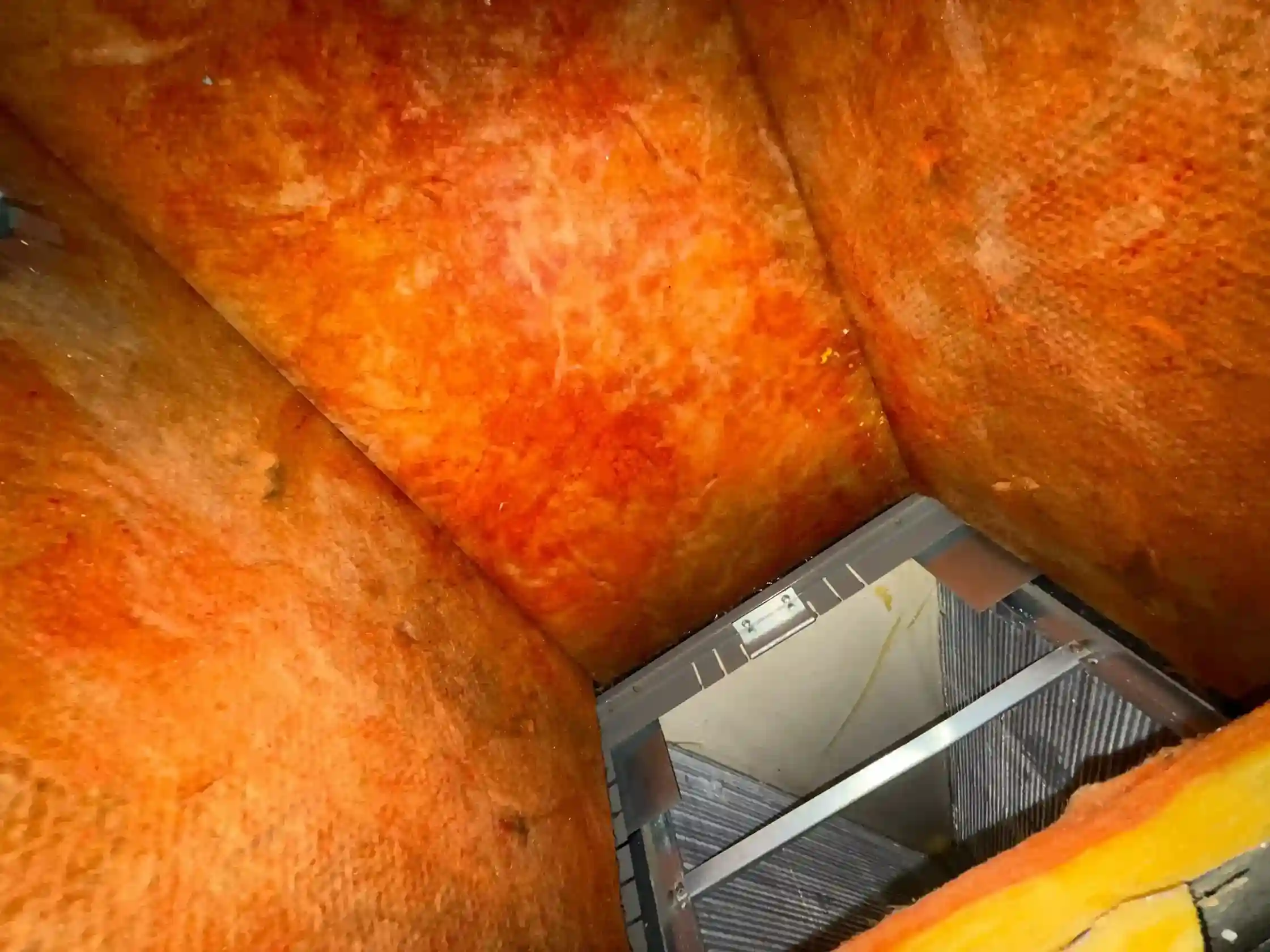
HVAC Unit Interior Inspection
Interior inspection of HVAC unit at Carter property. Blower assembly and wiring condition evaluated as part of comprehensive system cleaning and assessment.
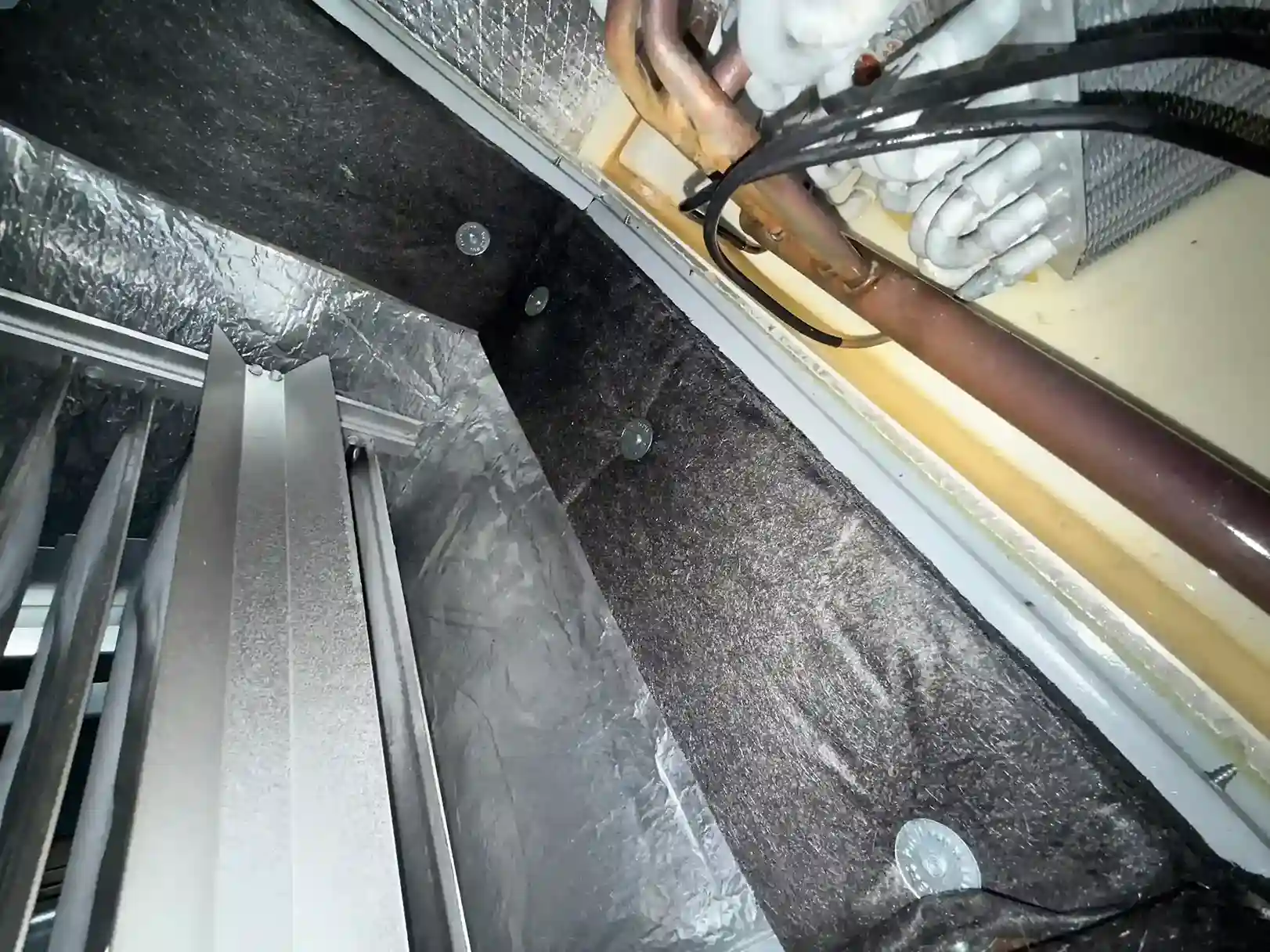
Air Handler Service Documentation
Air handler interior documented at Carter job site during cleaning service. Components inspected and cleaned to restore proper system function and airflow efficiency.